Camping the Alta Via 1: Complete Guide to Campsites, Rules and Itineraries
The Alta Via 1 is one of the most famous long-distance hiking trails in the Dolomites. Most hikers stay in mountain huts (rifugios), but many wonder whether it’s possible to camp the Alta Via 1 instead.
Camping the trail is possible, but it requires more planning than the traditional hut-to-hut route. Wild camping is generally restricted across much of the Dolomites, and campsites are limited along the trail.
This guide explains everything you need to know about camping the Alta Via 1, including the rules, campsite options, and how to plan a camping itinerary.
Updated March 2026.
Can You Camp on the Alta Via 1?
Camping along the Alta Via 1 in the Dolomites is challenging but not impossible.
The main issue is that much of the trail passes through protected natural parks, where wild camping is typically prohibited. Because of these regulations, hikers usually rely on official campgrounds located near the trail rather than pitching a tent directly on the route.
Most hikers who want to camp the Alta Via 1 use one of these approaches:
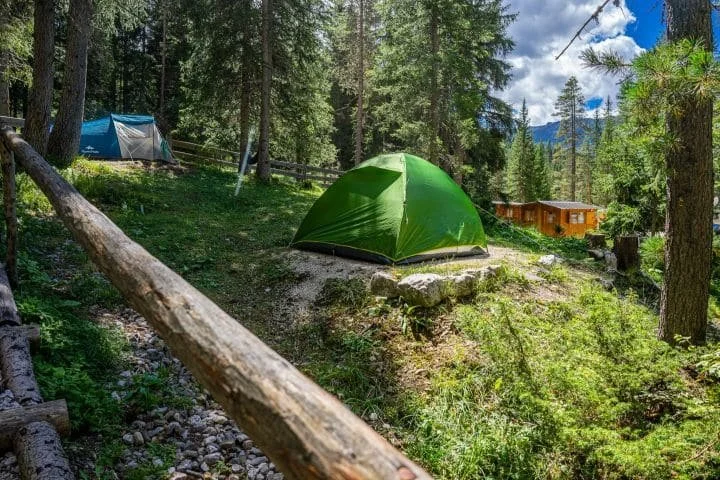
Stay at official campsites near the trail
Combine camping with occasional rifugio stays
Use bivouac shelters where permitted
Due to the limited number of campsites along the route, many hikers combine camping and mountain huts for the most practical itinerary.
WHAT ARE THE Wild Camping Rules in the Dolomites?
Wild camping regulations in the Dolomites vary by region, but in general wild camping is not permitted inside national parks and protected areas.
Much of the Alta Via 1 passes through:
Parco Naturale Fanes-Sennes-Braies
Parco Naturale Dolomiti Bellunesi
Several regional protected landscapes
In these areas, camping is typically restricted to designated campsites.
In some alpine regions outside protected areas, emergency bivouacking may be tolerated above the treeline, but this should not be relied upon for planning a trek.
For this reason, hikers planning to camp the Alta Via 1 usually organise their route around established campgrounds located close to the trail.
For those interesting in reading the laws that governs the natural parks along the AV1 trail, you can read below. We have also been in touch with them to confirm these regulations.
Can You Hike the Alta Via 1 Using Only Campsites?
Technically it is possible to hike the Alta Via 1 using campsites, but it requires significant detours and careful planning.
The main challenges include:
Limited campsites along the trail
Some stages ending in remote mountain terrain
Long distances between campgrounds
For this reason, most hikers find that a mixed approach works best.
A common strategy is to:
Camp when campgrounds are available
Stay in rifugios during remote sections
Use valley campsites where the trail descends
This allows hikers to carry camping gear while still maintaining a manageable itinerary.
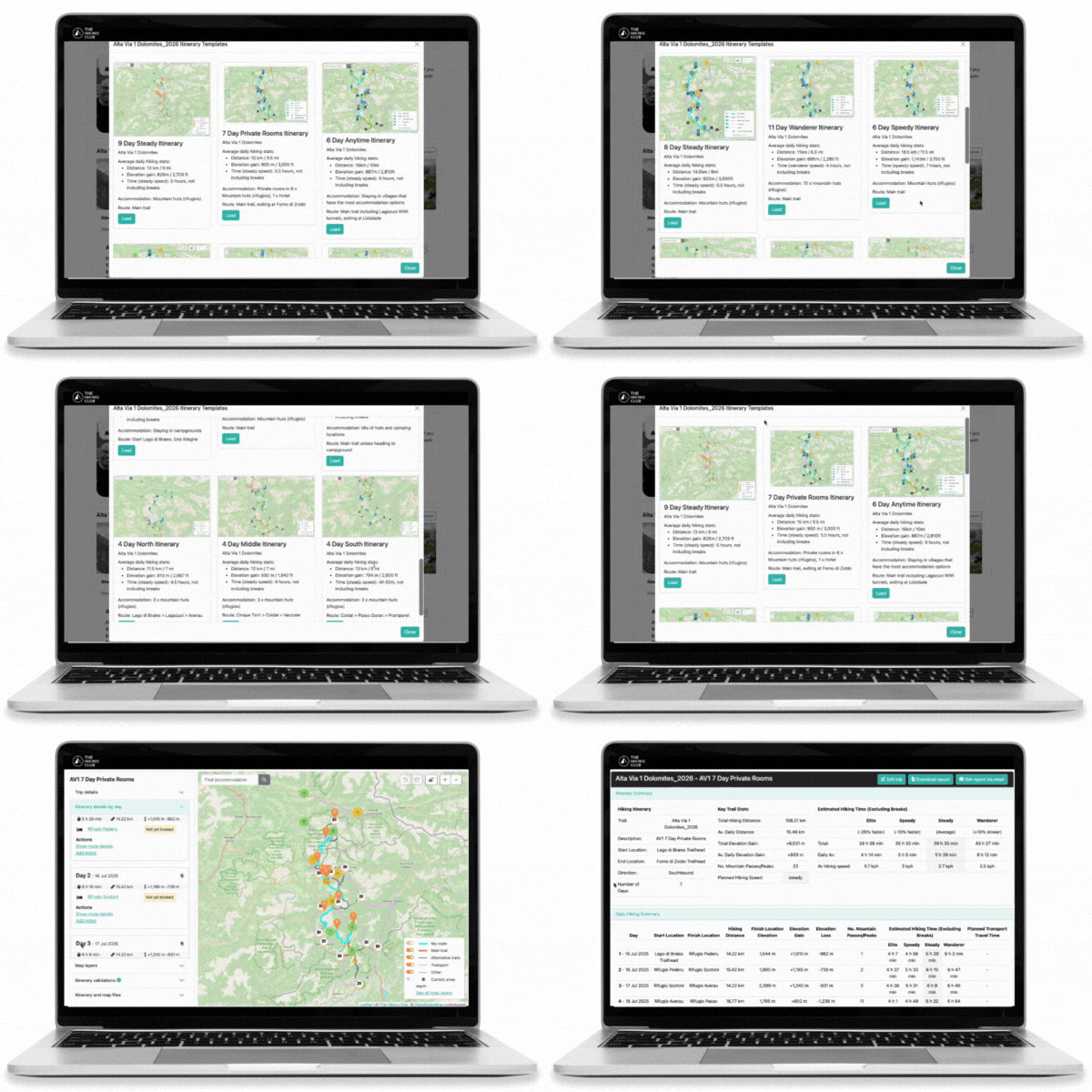
SAMPLE ITINERARY: 6 DAY CAMPING ONLY
Average daily hiking stats:
Distance: 16km / 10mi
Elevation gain: 885m / 2,900ft
Time (wanderer pace): 6 hours 20 mins, not including breaks
Route: Lago di Braies > Listolade
Accommodation: Campgrounds

SAMPLE ITINERARY: 9 DAY CAMPING + Huts
Average daily hiking stats:
Distance: 14 km / 8.5 mi
Elevation gain: 850 m / 2,800 ft
Time (wanderer speed): 5.5 hours, not including breaks
Accommodation: 5 x campgrounds, 3 x mountain huts (rifugios)
Route: Combination of main trail, alternate trails and connecting trails to campgrounds

Pros and Cons of Camping the Alta Via 1
Before deciding whether to camp the Alta Via 1, it’s worth considering the advantages and disadvantages compared with staying in mountain huts.
Advantages of Camping:
Lower accommodation costs
More independence when planning your itinerary
Flexibility if huts are fully booked
Greater self-sufficiency on the trail
Disadvantages of Camping:
Few campsites directly on the route
Heavier backpack
Detours required to reach campgrounds
Less convenient than hut-to-hut trekking
Because of these limitations, many hikers prefer the traditional rifugio-based Alta Via 1 trek, while others enjoy the independence that camping offers.
Tips for Camping the Alta Via 1
If you plan to camp while hiking the Alta Via 1, these tips can help make your trip smoother.
1. Plan your campsite stops in advance
Because campsites are limited, you should map out where you will stay each night before starting the trek.
2. Combine camping with rifugios
A hybrid itinerary makes the trek much easier while still allowing you to camp on parts of the trail.
3. Carry lightweight gear
A lightweight tent and compact sleeping system will make the steep climbs of the Dolomites far more manageable.
4. Check park regulations
Rules for camping can vary between regions, so always check the latest regulations before your trip.