How much does it cost to hike the West Highland Way?

The cost of walking the West Highland Way can vary depending on several factors, including the type of accommodation, meals, transport, and any additional services like luggage transfers.

Here's an approximate breakdown of the costs you can expect:

1. Accommodation Costs

  • Camping: Campsites along the trail typically cost between £8 to £15 per night for a pitch. Wild camping is free but not always recommended due to weather conditions and lack of facilities.

  • Hostels: Prices range from about £20 to £30 per night for a bed in a shared dormitory.

  • Bed and Breakfasts (B&Bs): Typically, B&Bs charge around £30 to £50 per night per person for a shared room, with private rooms costing more, often around £60 to £100 depending on the location and amenities.

  • Hotels and Guesthouses: A standard hotel room can cost between £80 and £150 per night depending on the location and season.

  • Self-Catering Cottages: Prices for self-catering cottages range from £100 to £200 per night, often for a group or family, with discounts for longer stays.

Forest View Guest House, Kinlochleven


2. Food and Drinks

  • Meals: Expect to pay £5 to £15 per meal in casual restaurants or cafes. Evening meals at pubs or restaurants generally cost £10 to £20.

  • Self-Catering: If you're staying in a self-catering accommodation or camping and cooking your own meals, you can reduce food costs by purchasing groceries, with typical grocery bills being around £20 to £40 for a week.

Delicious meal at Kingshouse

3. Transport Costs

  • Getting to the Trail: Travel to Milngavie (start of the trail) from Glasgow by public transport (train or bus) costs about £3 to £6.

  • Getting Home from Fort William: A train or bus back from Fort William to Glasgow costs around £20 to £30 depending on the service.

  • Luggage Transfer: Many hikers opt to use luggage transfer services, which cost around £6 to £12 per day per bag. This can total £30 to £70 for a full 5-7 day hike.

Official end of The West Highland Way in Fort William

Estimated Total Costs for a 7-Day Hike (South to North):

  • Budget Option (Camping/Hostels, Self-Catering Meals): £350 to £500

  • Mid-Range Option (B&Bs/Guesthouses, Eating Out): £600 to £900

  • Comfortable Option (Hotels, Eating Out, Luggage Transfer): £1,000 to £1,500


Summary:

The cost of hiking the West Highland Way can range from around £350 to £1,500+ depending on your accommodation choices, meals, and services you opt for (like luggage transfers). It's a good idea to plan and budget ahead, especially during peak season when accommodation may be pricier.

Ready to start planning your West Highland Way adventure?

Start planning now

Complete guide to camping the West Highland Way

Camping along the West Highland Way is a rewarding way to experience the trail, especially if you're looking for a more budget-friendly and nature-focused option. There are several camping options available, from official campsites to wild camping. Here’s an overview:

1. Official Campsites

There are several designated campsites along the trail, which provide facilities such as toilets, showers, and sometimes kitchen areas. These campsites tend to be located near towns or at popular stopping points along the route. Here are some key campsites along the West Highland Way:

  • Balmaha (Loch Lomond) – One of the most popular campsites, offering good facilities with beautiful views of Loch Lomond.

  • Inverarnan – Located near the Inverarnan Hotel, this site offers basic facilities and is a great midway stop.

  • Tyndrum – A well-equipped campsite with views of the surrounding mountains.

  • Kinlochleven – Near the end of the trail, this campsite offers good facilities to rest before tackling the final stretch to Fort William.

  • Bridge of Orchy – This campsite offers great views and is conveniently located for a stopover on the trail.

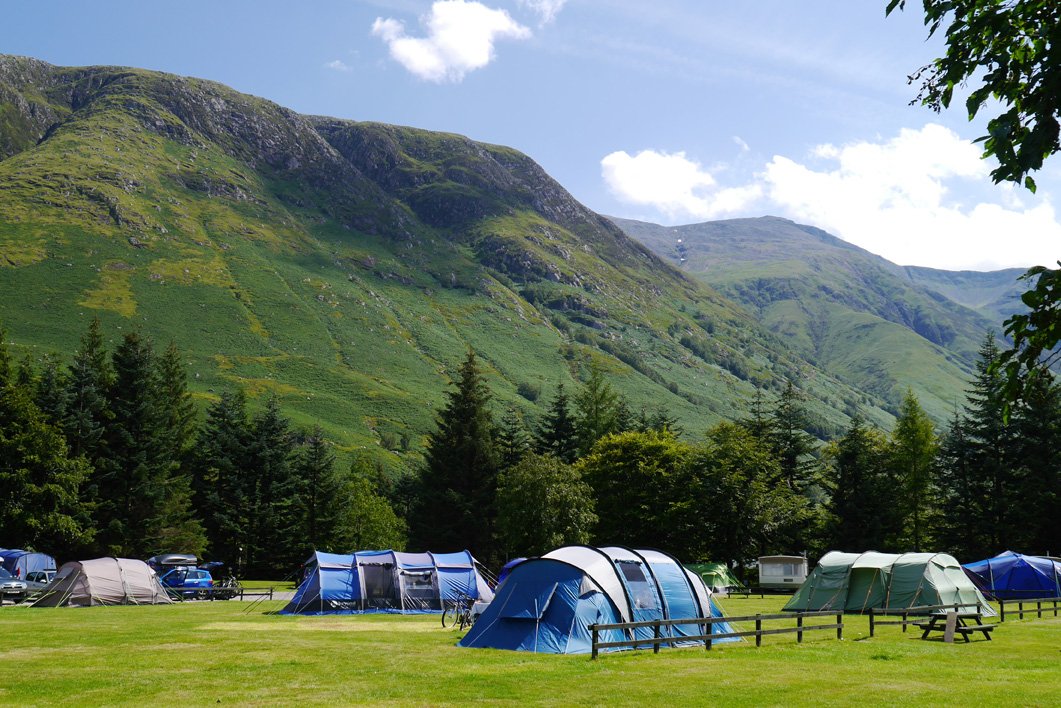
Glen Nevis Campsite

2. Wild Camping

  • Legal Status: Wild camping is permitted in Scotland under the Land Reform (Scotland) Act 2003, as long as it's done responsibly and with respect for the environment. This means you can camp in most places, provided you follow the "Scottish Outdoor Access Code" principles.

  • Best Areas for Wild Camping: Many parts of the West Highland Way are ideal for wild camping, including areas around Loch Lomond, Rannoch Moor, and near Glencoe. However, some sections, like those near villages or sensitive nature areas, may have restrictions or be less suitable for wild camping. Read the official Camping Management Byelaws to understand the specific camping restrictions and permit requirements.

  • Important Considerations:

    • Campsites vs Wild Camping: While wild camping gives you more flexibility, official campsites offer more security and facilities, making them easier and more comfortable.

    • Weather: The weather in the Scottish Highlands can be very unpredictable, so wild camping requires good preparation, especially in terms of gear and knowing how to handle the conditions.

    • Water Sources: Make sure to camp near a reliable water source, but always purify water before drinking.

    • Respect for Nature: Always camp at least 100 meters away from any buildings or roads and avoid camping on agricultural land or near protected wildlife areas.

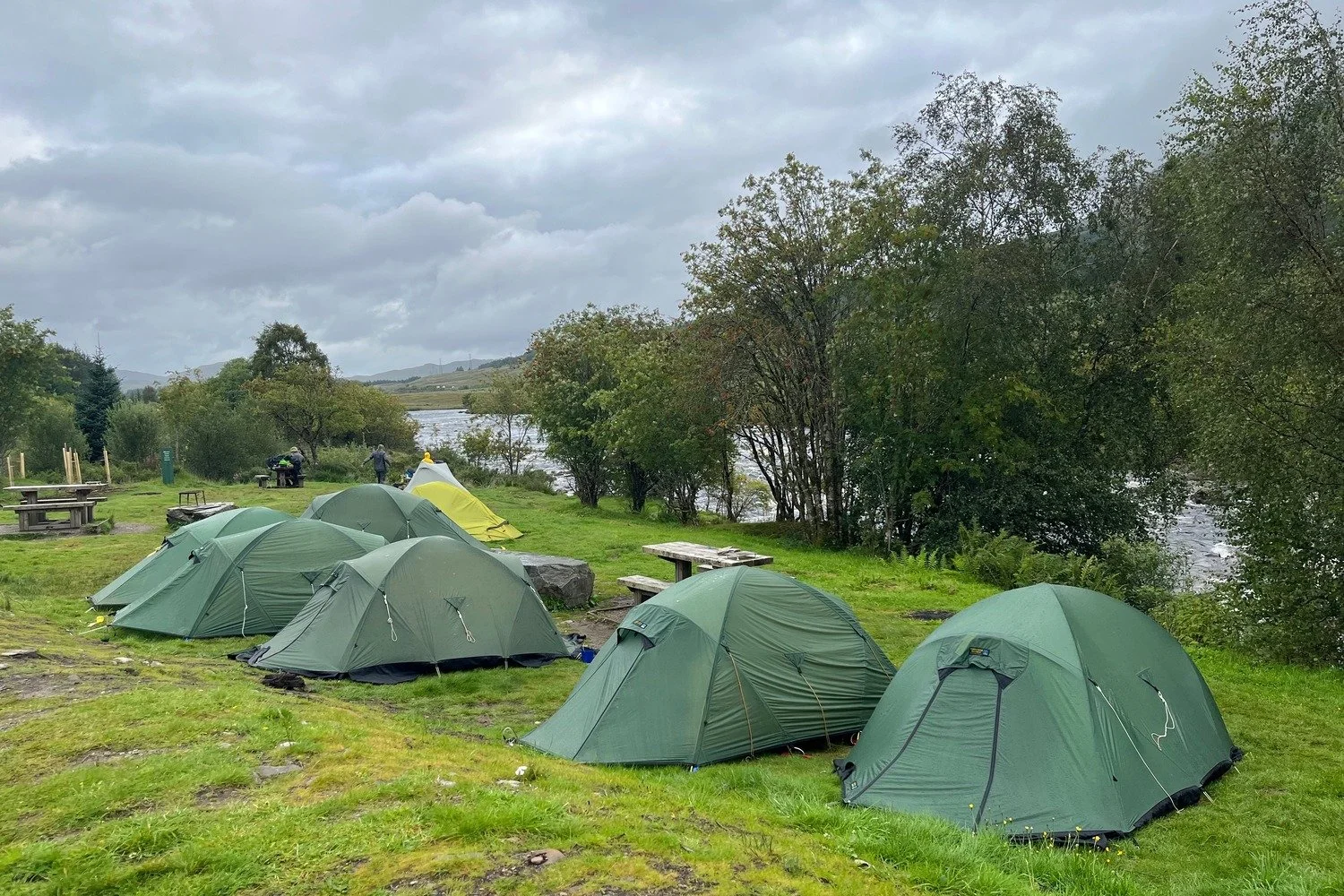
Wild camping (bivy) location at Bridge of Orchy


3. Camping Gear

  • Tent: A lightweight, weatherproof tent is essential for wild camping, especially given the often wet and windy conditions in the Highlands.

  • Sleeping Bag and Mat: Ensure you have a good sleeping bag suited for the season and a comfortable mat for insulation.

  • Cooking Equipment: If you plan to cook your meals, you’ll need a stove, fuel, and cooking utensils. Many campsites have kitchen areas, but for wild camping, bring your own.

Download packing list

4. Bivvying

  • Another option is bivvying, where you sleep in a bivy bag (a lightweight, weatherproof shelter). This is suitable for more experienced hikers looking to travel light. However, it's more exposed to the elements, and you need to be prepared for changing weather conditions.

5. Camping Tips

  • Plan Your Stops: While you can camp at many points along the trail, some areas may be better for camping than others, especially in terms of terrain, weather protection, and distance between campsites.

  • Booking Campsites: In high season, some campsites may require pre-booking, especially those near popular areas like Loch Lomond.

  • Avoid the Crowds: If you prefer more solitude, wild camping is a good option, though it’s still important to camp away from heavily trafficked areas.

  • Keep It Clean: Always follow the Leave No Trace principles—dispose of waste responsibly, pack out all trash, and leave the area as you found it.

Glencoe Mountain Resort Campsite

Summary:

You can definitely camp along the West Highland Way, with both official campsites and wild camping being available. Official campsites provide amenities and a bit more comfort, while wild camping offers more freedom and a closer connection to nature. Just be sure to plan ahead, respect the environment, and bring suitable gear to handle the often unpredictable Scottish weather.


Ready to start planning your West Highland Way adventure?

Get started

How difficult is the West Highland Way?

The West Highland Way is considered an easy to moderate long-distance trail. Its difficulty depends on factors such as fitness level, experience, weather conditions, and how many days you choose to complete the hike. Here’s an overview of what makes it manageable or difficult:

Key Factors Affecting Difficulty

1.Distance and Duration:

  • The main trail covers 97 mi / 155 km and typically takes 5–10 days to complete, averaging about 12–20 mi / 19–32 km per day depending on the hiker’s plan.

  • Breaking it into more days with shorter distances per day makes it more manageable, while completing it in fewer days increases the challenge.

2. Elevation Changes:

    • The trail has a cumulative elevation gain of approximately 12,800 ft / 3,900m.

    • While the climbs are not extremely high compared to mountain trekking, sections like Conic Hill, the Devil's Staircase, and parts of Rannoch Moor involve notable ascents and descents that can be strenuous.

Conic Hill

3. Terrain:

    • The trail covers varied terrain, including paved paths, forest trails, rocky and uneven paths, and boggy moorland.

    • Sections like Rannoch Moor are remote and exposed, offering beautiful but potentially challenging hiking, especially in poor weather.

4. Weather Conditions:

    • Scotland’s weather can be highly unpredictable, with sudden rain, wind, and fog, even in the warmer months.

    • Good preparation with waterproof gear and layered clothing is essential to handle changes in weather.

5. Midges:

    • From late spring to late summer, midges can be an annoyance, particularly in the mornings and evenings, adding a layer of discomfort if not prepared with repellent.

Drove road to Glencoe via Rannoch Moor

Who Will Find It Manageable?

  • Moderately Experienced Hikers: Those with some long-distance hiking experience should find the trail challenging but manageable, especially if broken into smaller daily sections.

  • Beginners with Preparation: Less experienced hikers can also complete it with adequate preparation, reasonable fitness levels, and a plan that includes shorter daily hikes and plenty of rest.

Who Might Find It Challenging?

  • Inexperienced Hikers: Without any prior hiking experience, the length and elevation changes can be daunting.

  • Those Unprepared for Weather: The unpredictable weather can make it challenging if hikers are not prepared with proper clothing and gear.

  • Hikers with Time Constraints: Attempting to complete the trail in a shorter period can turn it into a grueling experience.

Start of Devil’s Staircase

Tips for a Successful Hike

  • Train in advance with long walks and some hill climbing to build stamina.

  • Invest in quality hiking boots and waterproof gear.

  • Plan accommodation and food stops ahead, especially in peak season.

  • Check weather forecasts and adjust your itinerary as needed.

Overall, the West Highland Way offers a rewarding hiking experience with some challenges, balanced by spectacular scenery and a sense of achievement upon completion.


Get strong, fit and prepared to hike the west highland way

Our 3-month hiking training plan is designed for hikers preparing for a multi-day hike.

It’s for those that are looking to improve their hiking performance through a combination of step endurance, cardio, and strength activities.

Learn more

Introducing Ricky Munday, Trail Expert for West Highland Way

Introducing Ricky Munday, Trail Expert for the West Highland Way

We are excited to share that Ricky Munday has joined The Hiking Club team as “Trail Expert, West Highland Way”.

Ricky is a qualified Mountain Leader, Chartered Accountant and has summited a spectacular list of the world’s highest peaks including Everest. He is also the Founder Director of Inspire Alpine, a social enterprise to help close the attainment gap faced by disadvantaged young people.

Ricky lives in Glasgow, Scotland and knows the West Highland Way inside and out. He has walked, cycled and ran stages of the West Highland Way over the past 15+ years. He has experienced the route during all seasons - summer, winter and shoulder. He has camped and stayed in accommodation. He has hiked with and without baggage transfer. He also provides guiding services for those that are interested in tackling more technical and/or remote alternative routes, such as summiting Ben Nevis.

As the “Trail Expert, West Highland Way”, Ricky will be the key point person on our team for this trail. Our planning app will not only include necessary data and information to hiking the main trail, but also the inclusion of alternative routes, highlights and Munros that provide a unique experience. He will also provide consulting services via our Expert Access and Expert Consultation packages, present workshops and webinars, answer customer support questions and lead marketing activities.

With Ricky’s local expertise, we aim to bring the most comprehensive planning tool for the West Highland Way to The Hiking Club community.

Book a call with Ricky

Tour du Mont Blanc Refuges: Booking Tips and Tricks

Tour du Mont Blanc Refuges: Booking Tips and Tricks

While many of the wonderful Tour du Mont Blanc refuges will feature on your ideal self-guided hiking itinerary, what do you do if they have no availability when you go to book your own trip? In this blog post, I’m going to share accommodation booking tips and my top 4 booking tricks for finding accommodation that will keep your trip alive.

2025 Training Diary: Preparing for the hiking season

This summer, The Hiking Club team will be completing over 1,200km / 750mi to hike the top 8 multi-day hikes in Europe. We’ll be doing this as part of our 2025 Trail Updates program, as well as launching new hikes onto The Hiking Club platform. Sounds exciting, right? But, if I’m honest, also a little daunting. When it’s not hiking season in the Alps, I live at sea level and don’t have mountains on my doorstep. Not the best environment to get my body mountain fit!

Like previous years, I will be using our 3-month training plan that was developed in collaboration with Stacey Hardin, Doctor of Physical Therapy, and Athletic Trainer. This training plan helps people like me, build the endurance and strength to complete a multi-day hike in the Alps.

The aim of this training diary is to keep me accountable, share my progress and hopefully motivate you to start or continue training for your next epic hiking journey

If you’re interested which legendary hikes we’ll be doing, they are: Tour du Mont Blanc, Alta Via 1 Dolomites, Walker’s Haute Route, Tour des Combins, Bernese Oberland Traverse, Tour of Monte Rosa, West Highland Way, and a few we’ll keep on the downlow :P


susan’s WEEK 1: creating my training plan

(Monday 12th March > Sunday 16th March)

The first hike that I’ll be tackling in June is the Alta Via 1 in the Dolomites. The trail is 120km / 75mi, 7,400m / 24,00ft in elevation gain, and I’m aiming to complete it in 5 days.

One of the first pieces of information the training template needs to calculate how long it will take me to prepare for this trail distance is my current weekly step count. Luckily, I wear my Apple Watch everyday so I can easily check last week’s count - 77,000 steps.

Based on the above information, it shows it will take me 13 weeks to work my step count to the hike distance of 120km / 75 mi. (See how the right column turns green at week 13 when my step gap to readiness goal is met). With my trip 12 weeks out, I need to get cracking to ensure I’m ready!

Based on last week’s step count and the trail stats for Alta Via 1 Dolomites, the training plan shows it will take me 13 weeks to build up the endurance to complete the trail in 5 days.

The next step is creating my week 1 training plan. This week is a little bit different from normal as I got a Peleton bike for my birthday (yes - best husband ever!) so I’ll start to incorporate indoor cycling into my weekly schedule.

My focus for the first 4 weeks is ramping up key elements:

  1. Increasing to 3 x strength sessions per week, by the end of the month

    • Plan: Use the training videos as part of the 3 month training program and start with 1 session in week 1, increase to 2 sessions for week 2 and 3, end with 3 sessions in week 4. I will tune into how my body feels as I activate new muscle groups and adjust accordingly.

  2. Add one big steps day per week, increasing by 10% per week

    • Plan: Schedule short hike / trail run on Friday mornings, starting with 1 hour.

  3. Continue 4+ short cardio sessions per week

    • Plan: Mixing up running, swimming and cycling

  4. Gradually increasing total weekly step count (+5% per week, to minimise chance of injury)

    • Plan: Last month average was 77,000 steps per week. Aim to increase to 90,000 steps by week 4.

Here’s what my week 1 plan looks like:

My week 1 training plan using the training template from the 3 Month Training Program.

I’ll report back on progress over the next few weeks. Wish me luck!

Via Ferrata Gear List

Via Ferrata Gear List

Essential gear for Via Ferrata: your complete gear list. Via Ferrata is an exhilarating way to experience the mountains, combining hiking with the thrill of climbing. To make sure you're well-prepared, having the right gear is crucial for safety and enjoyment. Here’s a short list of essentials you’ll need for a successful Via Ferrata adventure:

The Hiking Club acquires TMB Planner to make the accommodation booking process easier for self-guided hikers

We’re excited to announce that The Hiking Club has acquired TMB Planner. Their innovative data processing and notification technology gives Do It Yourself (DIY) planners a powerful tool to assist them in booking their accommodation, and end up with the best itinerary possible for popular multi-day hikes.

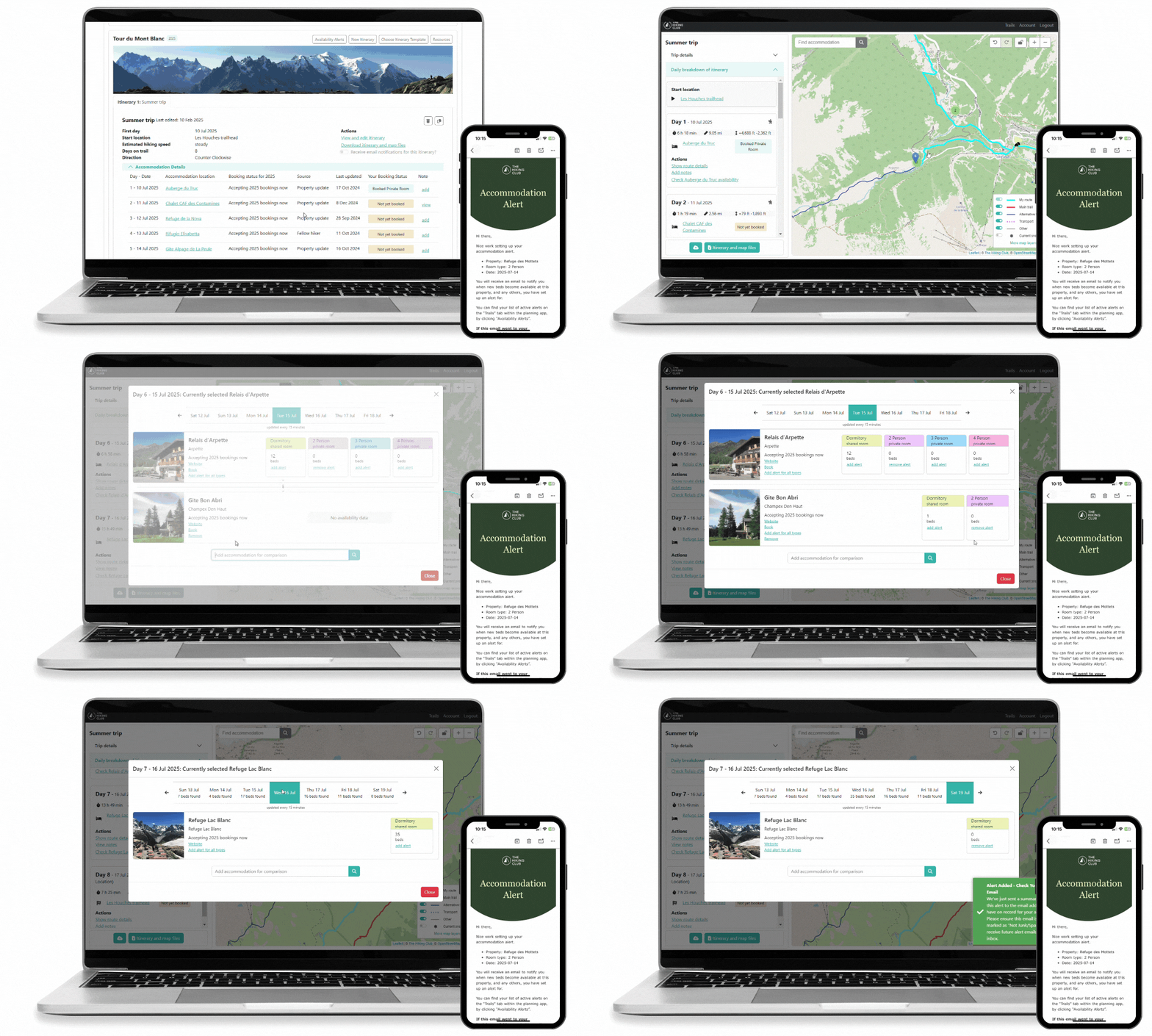
The Hiking Club route planning app for the Tour du Mont Blanc now has real-time availability for mountain huts and the ability to set email alerts for room types thanks to TMB Planner joining the family :)

TMB Planner was developed by Leon Lan, a Mathematics PhD candidate focused on supply chain optimization. The idea came from a personal need he had when friends asked to join his planned Tour du Mont Blanc (aka TMB) trip only a few months out from the hiking season. As the Tour du Mont Blanc is one of Europe’s most popular multi-day hiking trails, most of the places Leon had booked no longer had any availability. Leon created a tool that tracked real-time availability and alerted him if new availability became available.  As the hiking season approached, he received notifications and booked all the extra accommodation his friends needed to join him - what a good hiking buddy!

As part of this project, Leon found that most accommodation providers list new availability in the lead up to the hiking season, due to cancellations and tour operators giving up beds they don’t need. Based on data collected between December 2023 and the 2024 hiking season, over 2,000 beds were added back to online booking platforms for the mountain huts. Having already built the technology, Leon thought others in the hiking community would benefit from what he’d created, and so the availability calendar and alerts tool was born.

TMB Planner displays real-time availability for mountain huts that list their availability online, and notifies users via email when new beds become available to book for their target properties/dates. It helps: 

  • early season hikers be the ‘first to know’ when accommodation providers list their availability for next season, and 

  • gives later planners an opportunity to be notified when new beds (or private rooms) become available, so they can cancel off-trail accommodation and rebook their preferred property.

See real-time availability and set email alerts in The Hiking Club route planning app to be notified when new beds/room types become available

We are thrilled to welcome Leon into The Hiking Club family.  His innovative tools will support our mission to help self-guided hikers confidently plan, book and navigate their epic adventures. Booking your own accommodation on a multi-day hike, is one of the most difficult parts of planning your own hike. By combining TMB Planner’s technology with our own, we’ll provide The Hiking Club customers an easier booking experience, and the best chance to secure high-demand beds for their ideal itinerary
— Brendan Jones, Co-Founder and CEO, The Hiking Club

Tour du Mont Blanc availability calendar is now available on The Hiking Club website

I’m delighted that the technology I’ve created has found a home in The Hiking Club platform. The collaboration with Brendan and Nick from The Hiking Club has been excellent over the past few months, and I’m excited to continue working with The Hiking Club to extend the technology to other trails and maximise its benefit to the community.
— Leon Lan, Founder, TMB Planner

With the integration of TMB Planner into The Hiking Club platform, the availability calendar will now be accessible free on The Hiking Club website, without the need for any sign-up. The accommodation alerts have been integrated into our popular web-based planning app and available for Tour du Mont Blanc customers.


In the coming months, we’ll be working to extend the functionality to other popular trails such as Alta Via 1 Dolomites, West Highland Way, Walker’s Haute Route and more. Stay tuned for updates on this exciting integration!


About TMB Planner: Planning tools to make your Tour du Mont Blanc hike easier, including real-time hut availability and email alerts when huts begin accepting bookings for next season.


About The Hiking Club: With the first purpose-built app for multi-day hikes, up-to-date trail information, expert consultations, online events, a training program, and an active ambassador community, The Hiking Club has everything a self-guided hiker needs to confidently plan and navigate their epic adventure.

Introducing Jonas de Jong, trail expert for Tour des Combins

We are excited to share that Jonas de Jong has joined The Hiking Club team as “Trail Expert, Tour des Combins”.


Originally from the Netherlands, Jonas moved to Switzerland in 2016 and his love for the mountains blossomed. He’s hiked and run through forests, hills, and mountains, completing multi-day tours like the Tour du Mont Blanc, Tour des Combins and Tour du Monte Rosa. Jonas has also ventured into high-altitude mountaineering, having conquered over 10 of the Alps' 4,000-meter peaks. In trail running, he’s become one of the fastest from his low-altitude homeland, participating in races like Sierre-Zinal and OCC of the famed UTMB circuit.

Jonas is training to become an International Mountain Leader and has become an expert in the Pennine Alps region. He has experience during all seasons - summer, winter and shoulder - and offers guiding services for those that are interested in tackling more technical routes or to support a private group. He has guided groups all across the alps and beyond in hiking, trail running and snowshoeing.

As the “Trail Expert, Tour des Combins”, Jonas will be the key point person on The Hiking Club team for this trail. Our planning app will not only include necessary data and information for hiking the main trail, but also the inclusion of alternative routes and highlights that provide a unique experience. He will also provide consulting services via our Expert Access and Expert Consultation packages, present workshops and webinars, answer customer support questions and lead marketing activities.

With Jonas’ expertise, we aim to bring the most comprehensive planning tool for the Tour des Combins to The Hiking Club community.

Where to park my car when hiking the Tour des Combins

Where to park my car when hiking the Tour des Combins

If you’re planning to drive to the Tour des Combins with either your own or a rental car, parking can be an important consideration, as the trail spans both Switzerland and Italy, passing through several towns and remote areas. Here’s a breakdown of parking options for hikers embarking on the Tour des Combins, covering key starting points and access points for the trail.

When is the best time to hike the Tour des Combins

When is the best time to hike the Tour des Combins

The best time to hike the Tour des Combins is typically from late June to early September, when the weather is most favorable, the trail is clear of snow, and mountain huts are open. The choice between early or late summer depends on your preferences for weather and crowds, but both options offer stunning alpine landscapes and a challenging yet rewarding experience. Read our detailed blog to learn more about when is the best time to hike the Tour des Combins.

Introducing Nick Janzen, Co-Founder and Chief Technical Officer

Brendan, Susan and Nick, Co-Founders of The Hiking Club

We are excited to announce Nick Janzen, has officially joined The Hiking Club team as Co-Founder and Chief Technical Office (CTO).

Nick brings 12+ years GIS (Geographic Information System) experience from IBM, GSI, Tensing and Merkator, which is extremely valuable to mapping the complex, integrated trail networks of legendary multi-day trails. More importantly, he brings his passion of innovation to the hiking community.

Nick’s involvement with The Hiking Club began two and a half years ago when he reached out with an email subject ‘Can I Help?’. He shared our vision for how technology could improve the planning and preparation process, and knew that he had the skills to make a significant impact to the hiking community. Since then, Nick has been working nights and weekends with Brendan and Susan to build our planning app, the first purpose-built app for planning multi-day hikes.

Nick has been a fundamental part of The Hiking Club journey and our growth. We are excited that with the popularity of our planning app, we are able to bring Nick on full-time to deliver more innovation to the multi-day hiking space, accelerate our speed to launch new trails, and continue to provide a delightful customer experience.

We know that Nick is the right person for the role not only for his dedication and technical expertise, but also because he’s survived a ‘break the trail’ experience, brings his family on our crazy offsite trips, and shows resilience and enthusiasm in wild Scottish weather. We are inspired by his dedication to his work, his family and his outdoor endeavours, and can’t wait to see what we will do together on The Hiking Club.

- Brendan & Susan

Nick joining the 2022 Break The Trail hike on Tour du Mont Blanc

The Hiking Club first offsite in Switzerland

Bear crawling over Munros in strong winds along the West Highland Way

Families who hike together, stay together :)