How Difficult is Alta Via 4?
Alta Via 4 is one of the more challenging hut-to-hut hiking routes in the Dolomites, combining rugged alpine terrain, exposed mountain paths, cable-assisted sections and optional via ferrata routes.
However, the difficulty of Alta Via 4 changes significantly throughout the trail, progressively getting more difficult from North > Central > South.
Importantly, Alta Via 4 is not one fixed route difficulty.
Hikers can choose between the classic ferrata route or lower valley alternatives depending on their experience, confidence and desired level of challenge. While the non-ferrata variants avoid the most technical terrain, they still include many of the route’s iconic highlights such as Tre Cime di Lavaredo, Cadini di Misurina and Lago Sorapis.
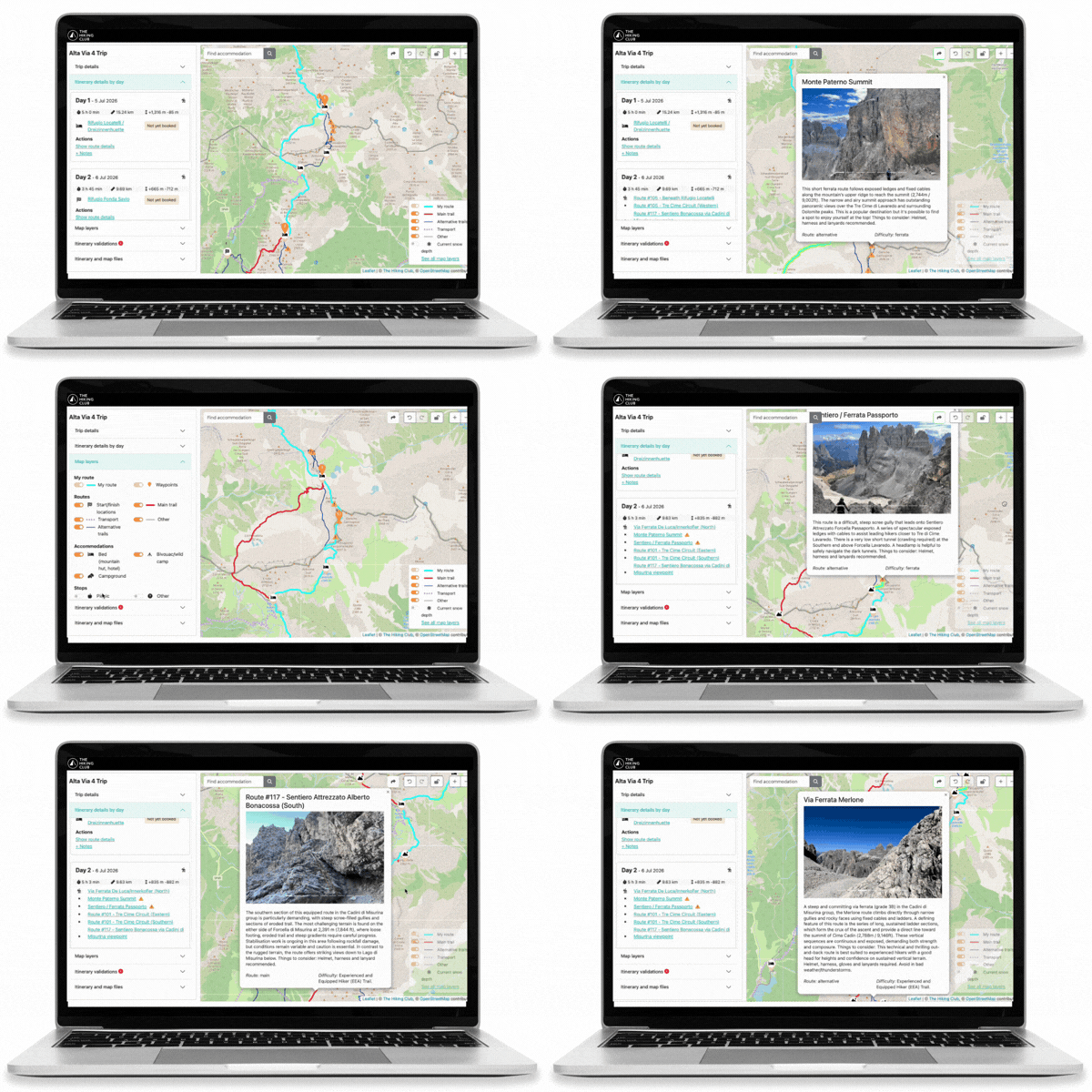
Our planning app allows hikers to customise their route difficulty by selecting either ferrata or non-ferrata variants throughout the trail.
Click below to jump to a specific section:
How difficult are the different sections of the Alta Via 4?
1) Northern Section
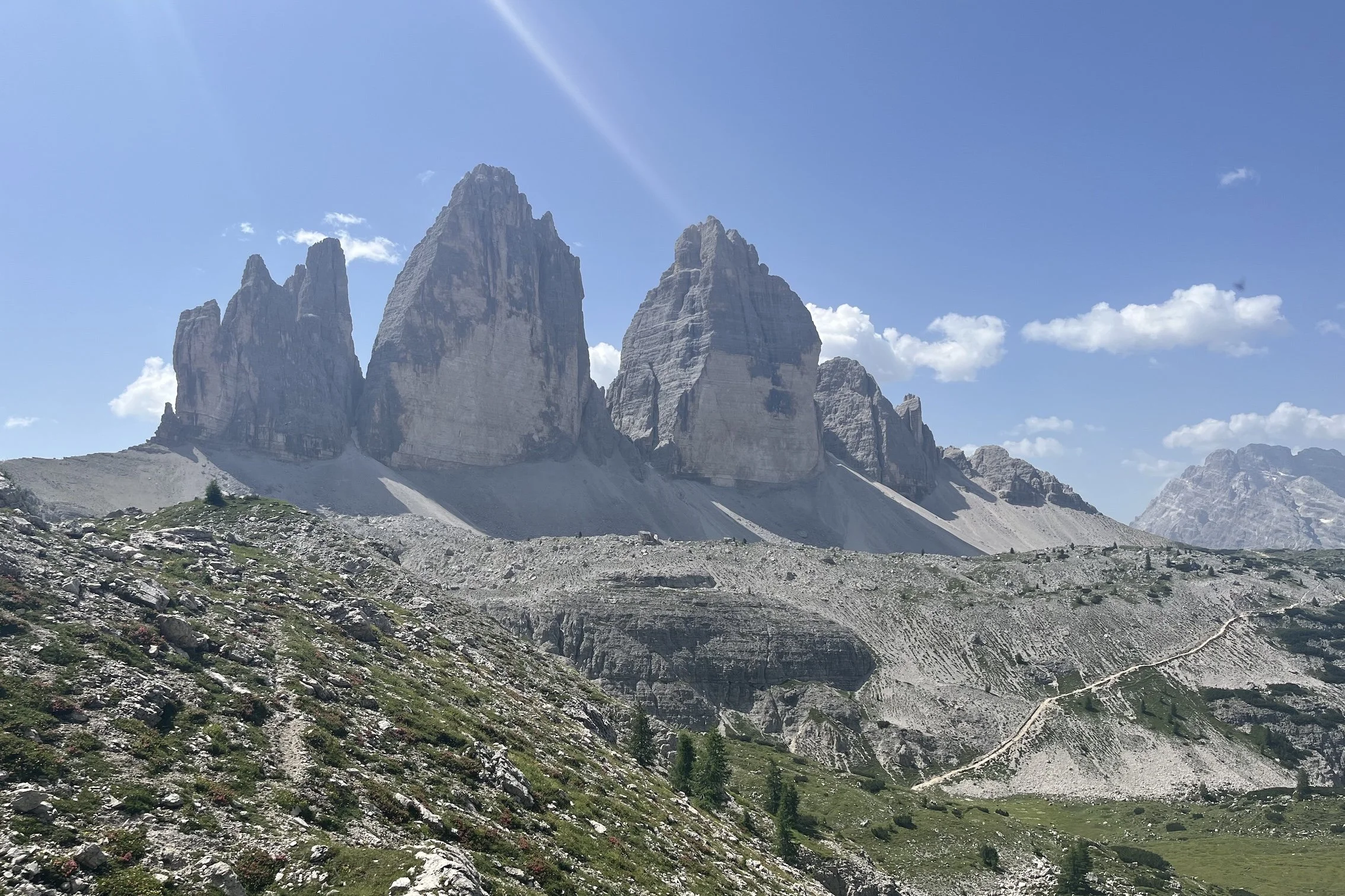
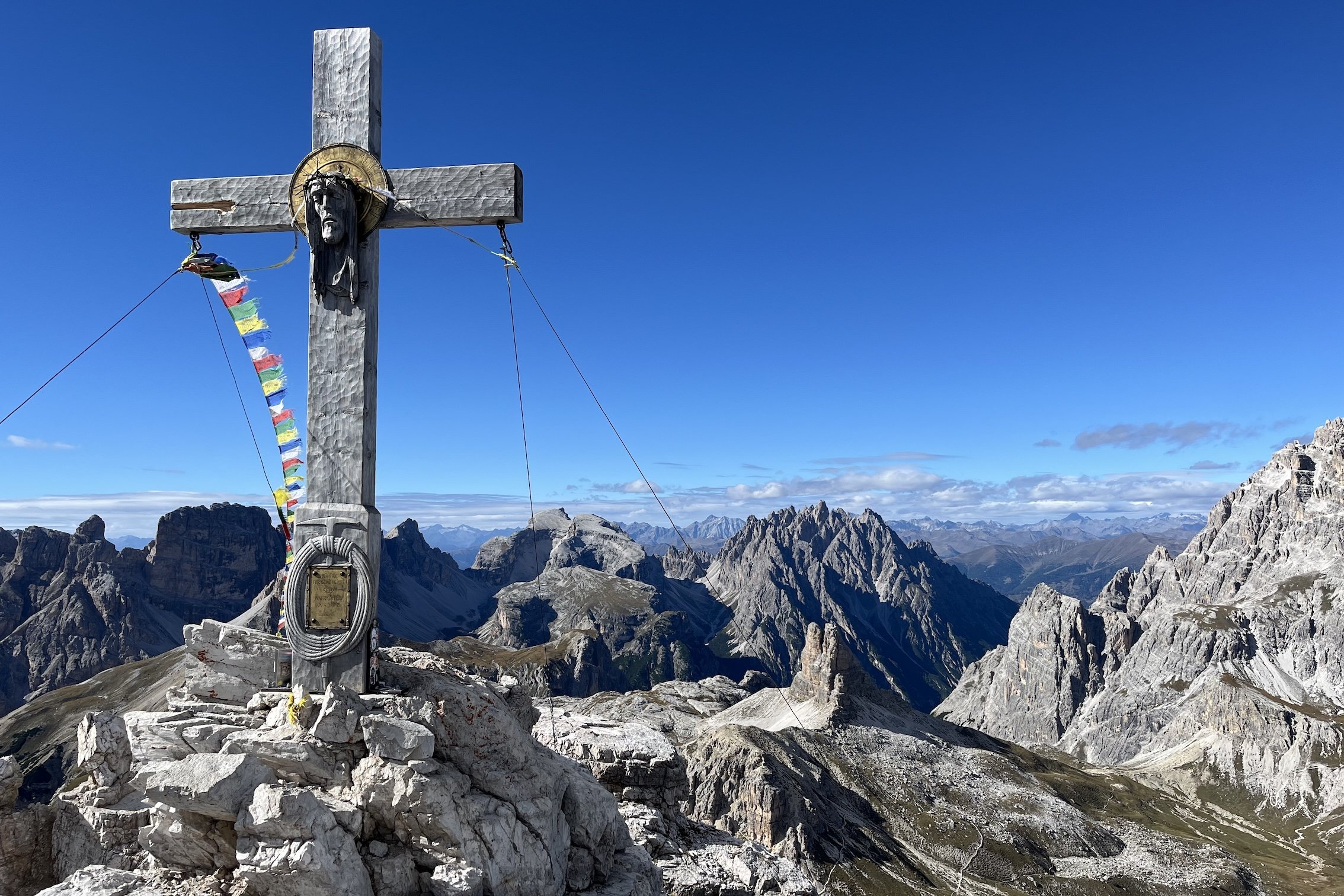
The northern section from San Candido, past Tre Cime di Lavaredo, onward to the Cadini di Misurina viewpoint is suitable for intermediate hikers and does not include cable-assisted or via ferrata terrain. This section features spectacular mountain scenery, high alpine passes and classic Dolomites rifugio hiking without significant technical difficulty.
It allows you to experience the Tre Cime di Laveredo area in the evening and early morning before the day hiking crowds arrive.

Optional via ferrata routes
For those interested in adding some via ferrata routes in the Tre Cime di Laverdo area that provide spectacular views and some adventure, we recommend Torre di Toblin (delle Scalette) and Monte Paterno loop (including Via Ferrat De Luca and Passporto)

2. CENTRAL SECTION
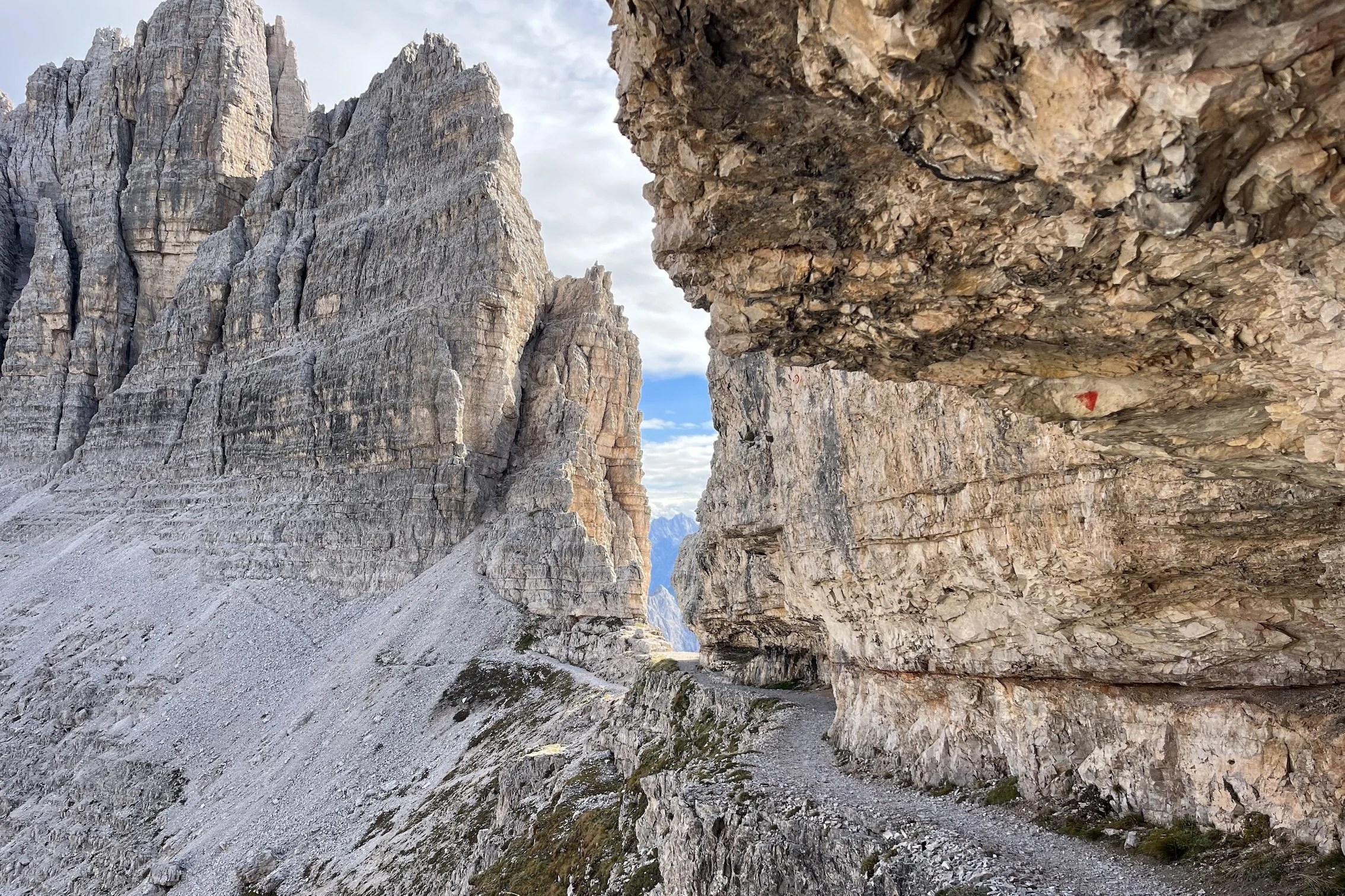
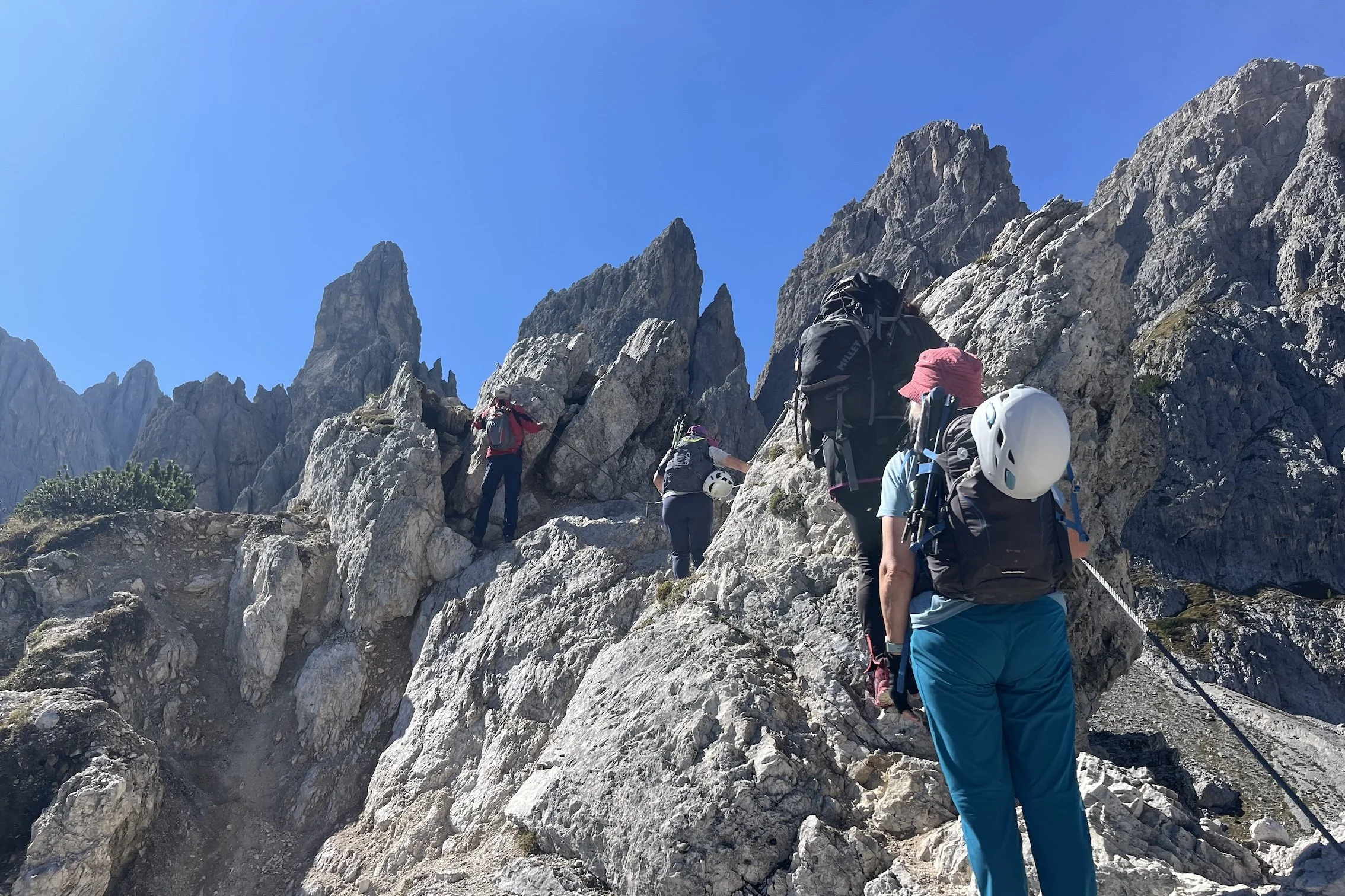
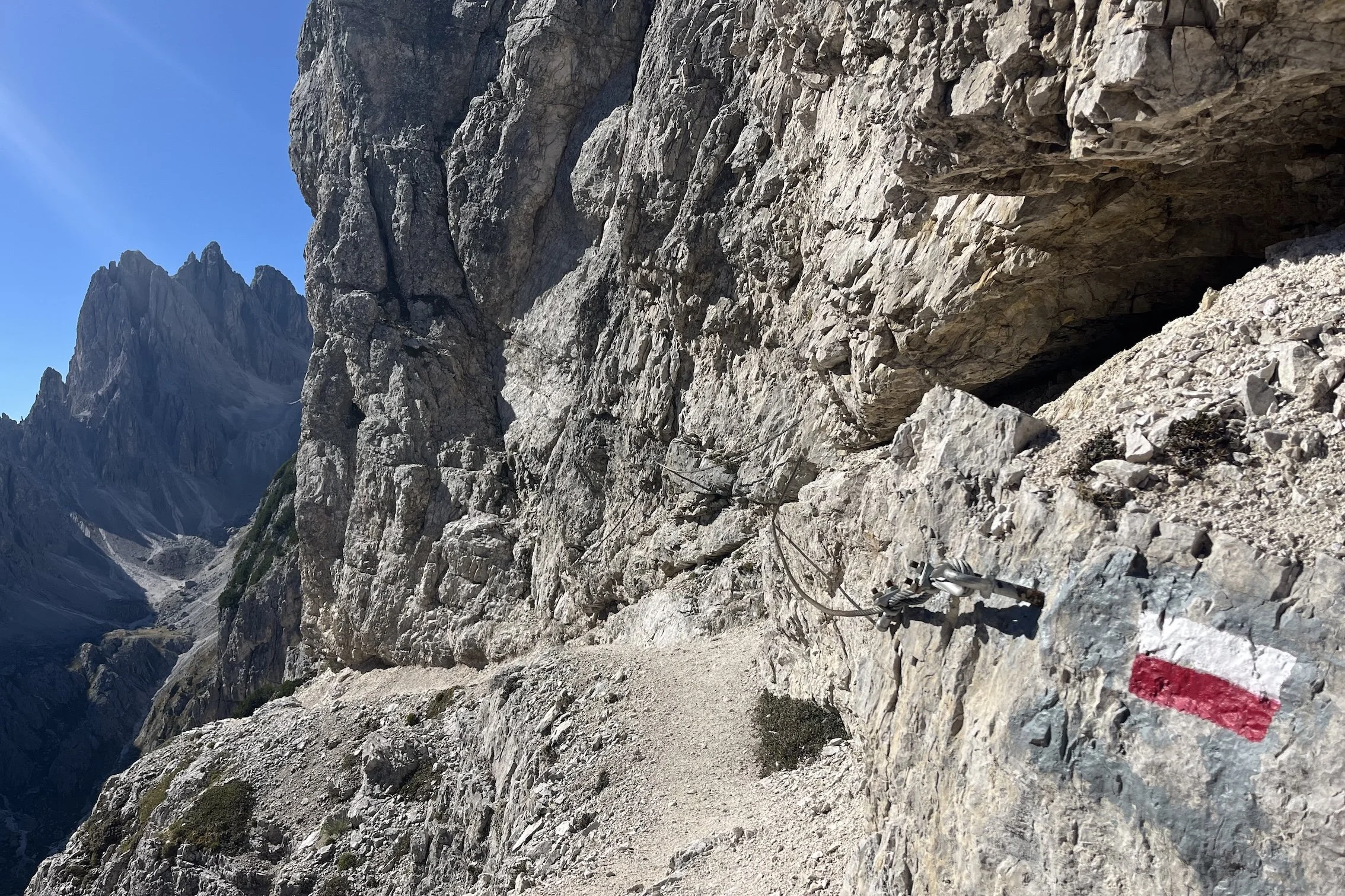
The central section from Cadini di Misurina to Lago Sorapis becomes more demanding and includes several exposed cable-assisted trails and ladders, particularly along Sentiero Attrezzato Alberto Bonacossa. These sections help hikers navigate steep or exposed terrain and may feel intimidating for hikers uncomfortable with heights.
Via ferrata gear is not required but may be helpful for those with limited exposure experience or uncomfortable on cable-assisted trails.
optional ferrata route
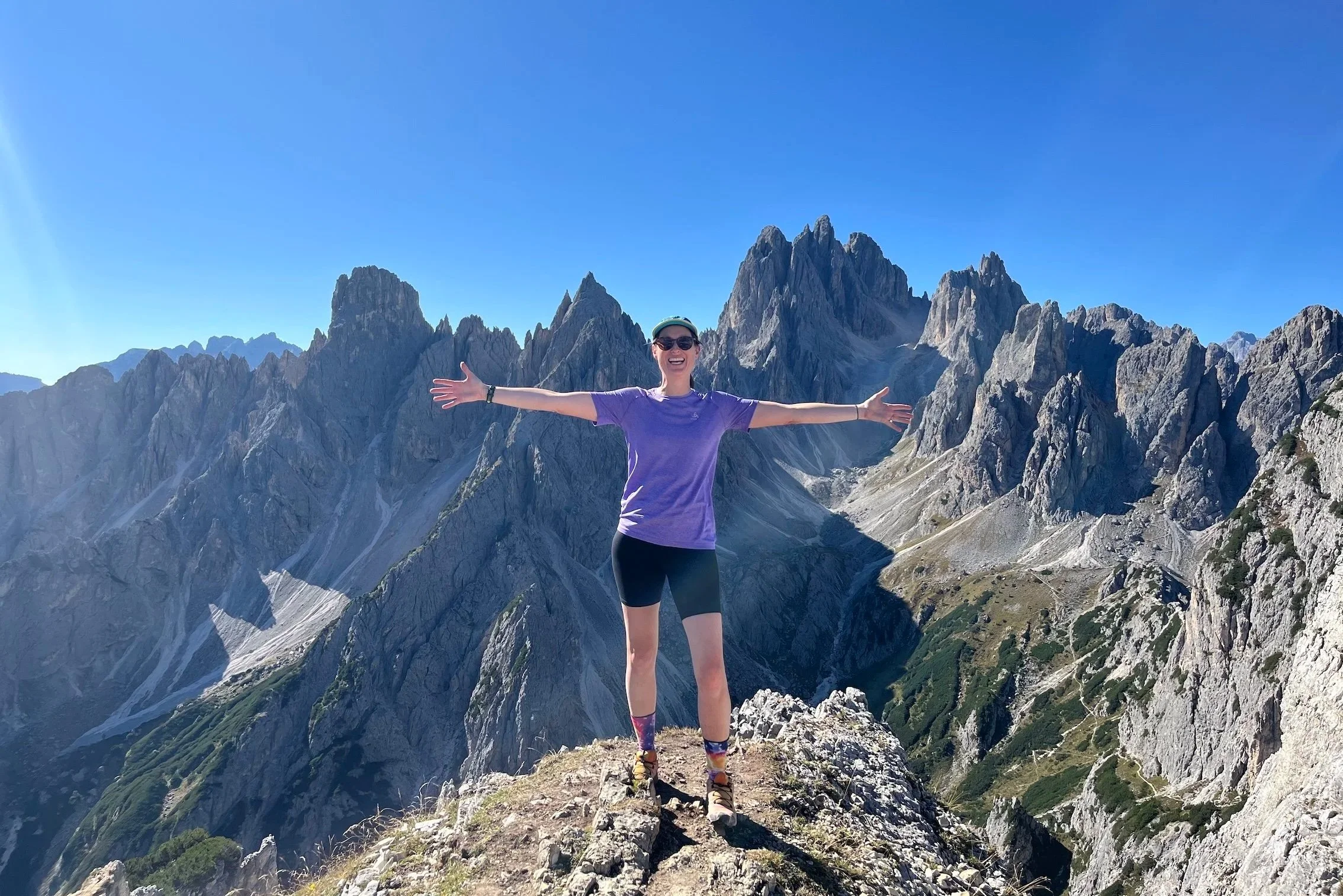
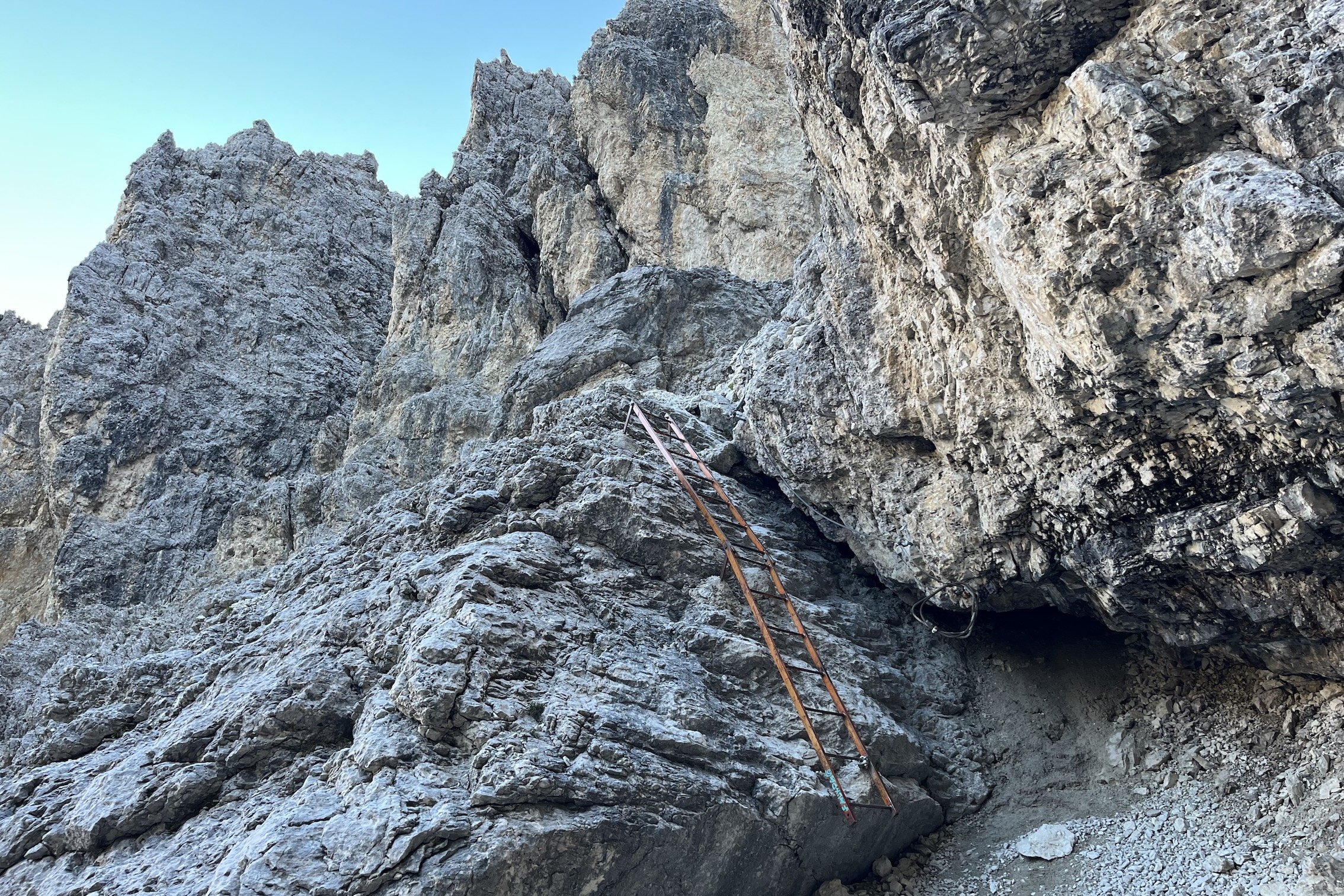
For those interested in adding a via ferrata along this section, we recommend Ferrata Merlone. A steep and committing via ferrata (grade 3B) in the Cadini di Misurina group, the route climbs directly through narrow gullies and rocky faces using fixed cables and ladders. A defining feature of this route is the series of long, sustained ladder sections, which form the crux of the ascent and provide a direct line toward the summit of Cima Cadin (2,788m / 9,146ft). These vertical sequences are continuous and exposed, demanding both strength and composure.
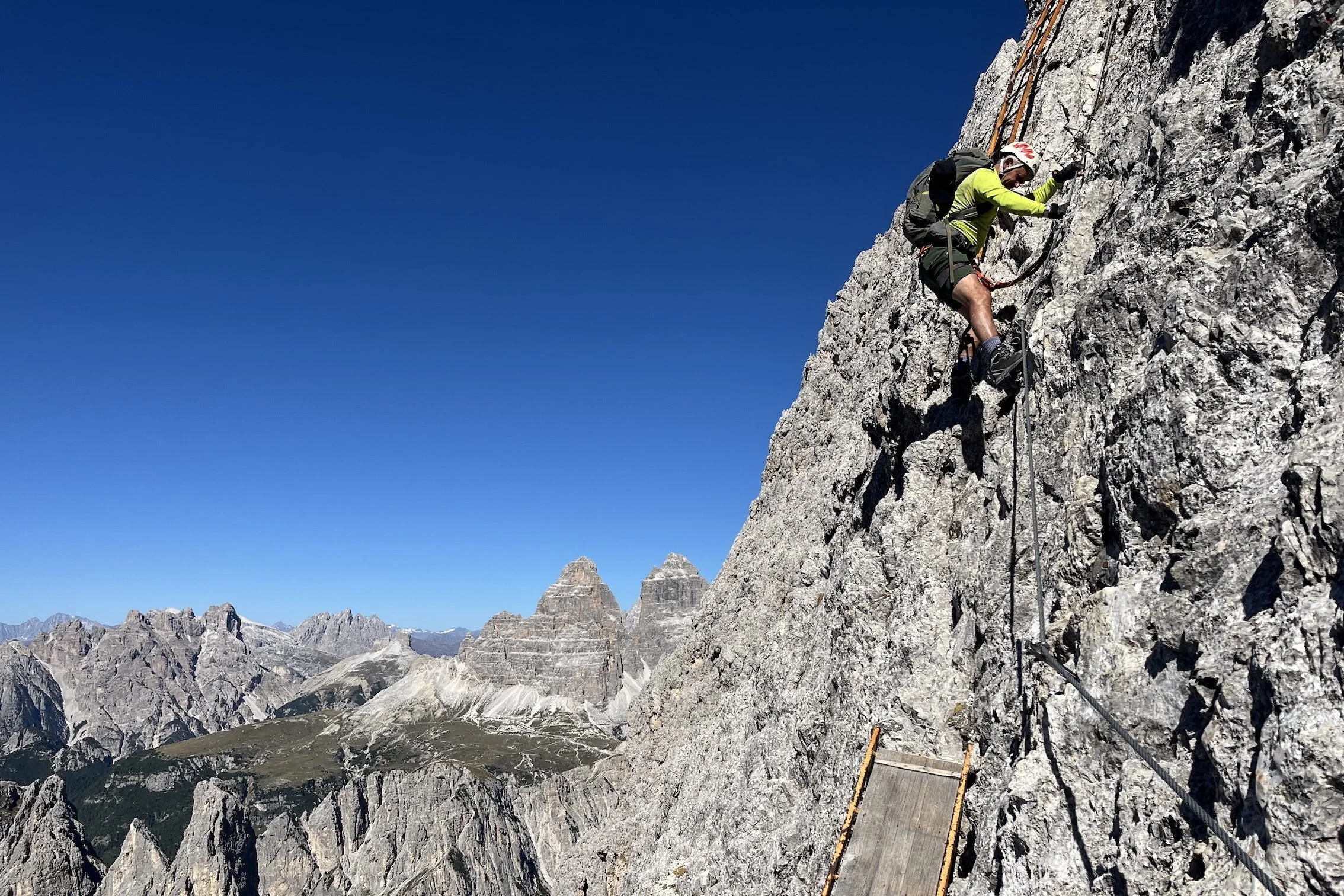
Ferrata Merlone: A spectacular via ferrata route in the Central section of the Alta Via 4 that accessed the summit of Cima Cadin (2,788m / 9,146ft).
3. SOUTHERN SECTION
The southern section contains the most technical terrain on Alta Via 4. The classic high route includes two via ferrata sections that require proper via ferrata equipment and experience. These ferrata routes provide access to spectacular alpine terrain and dramatic views of Lago Sorapis and the Ghiacciaio glacier that cannot be reached via the easier alternatives.
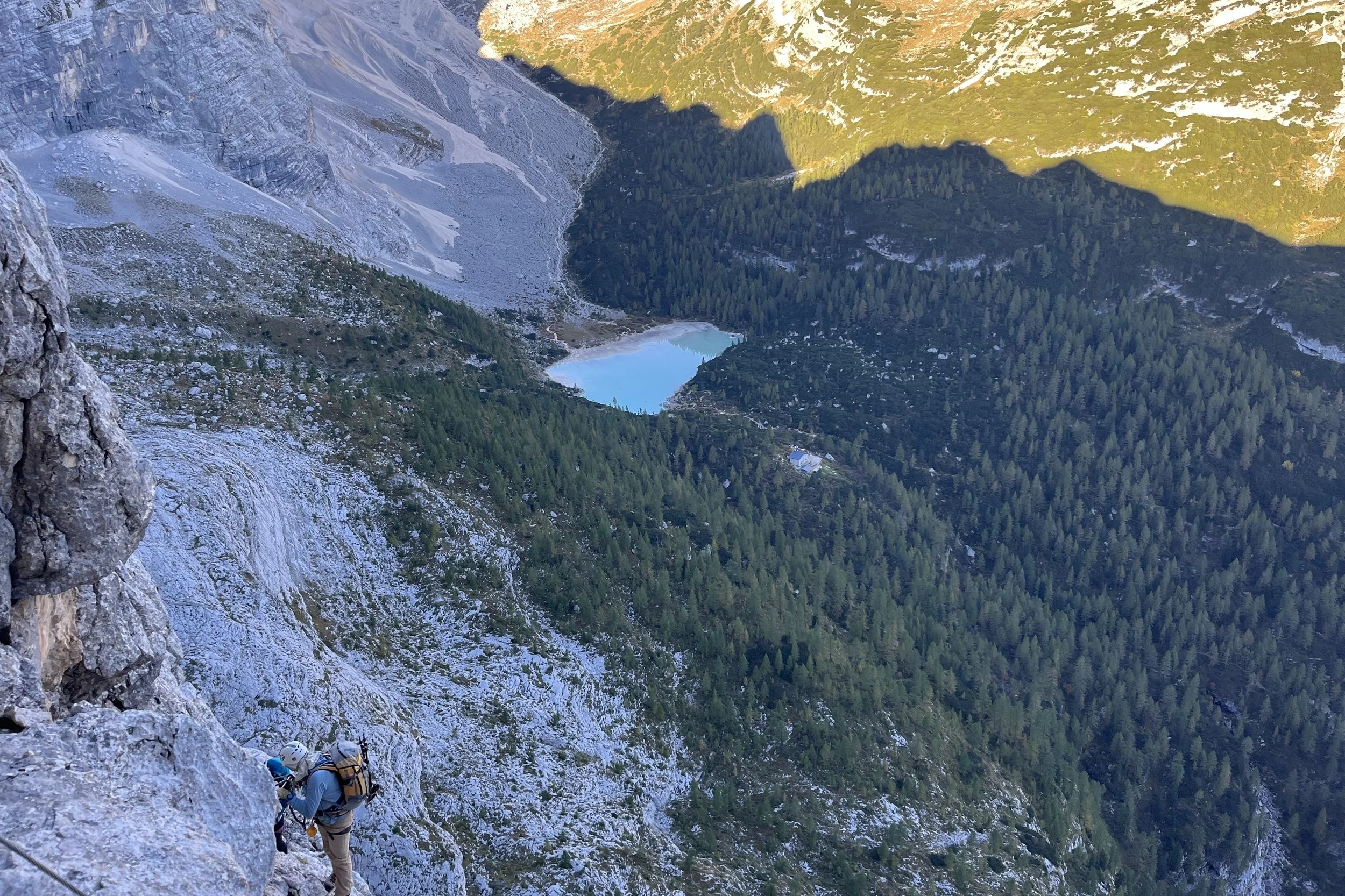
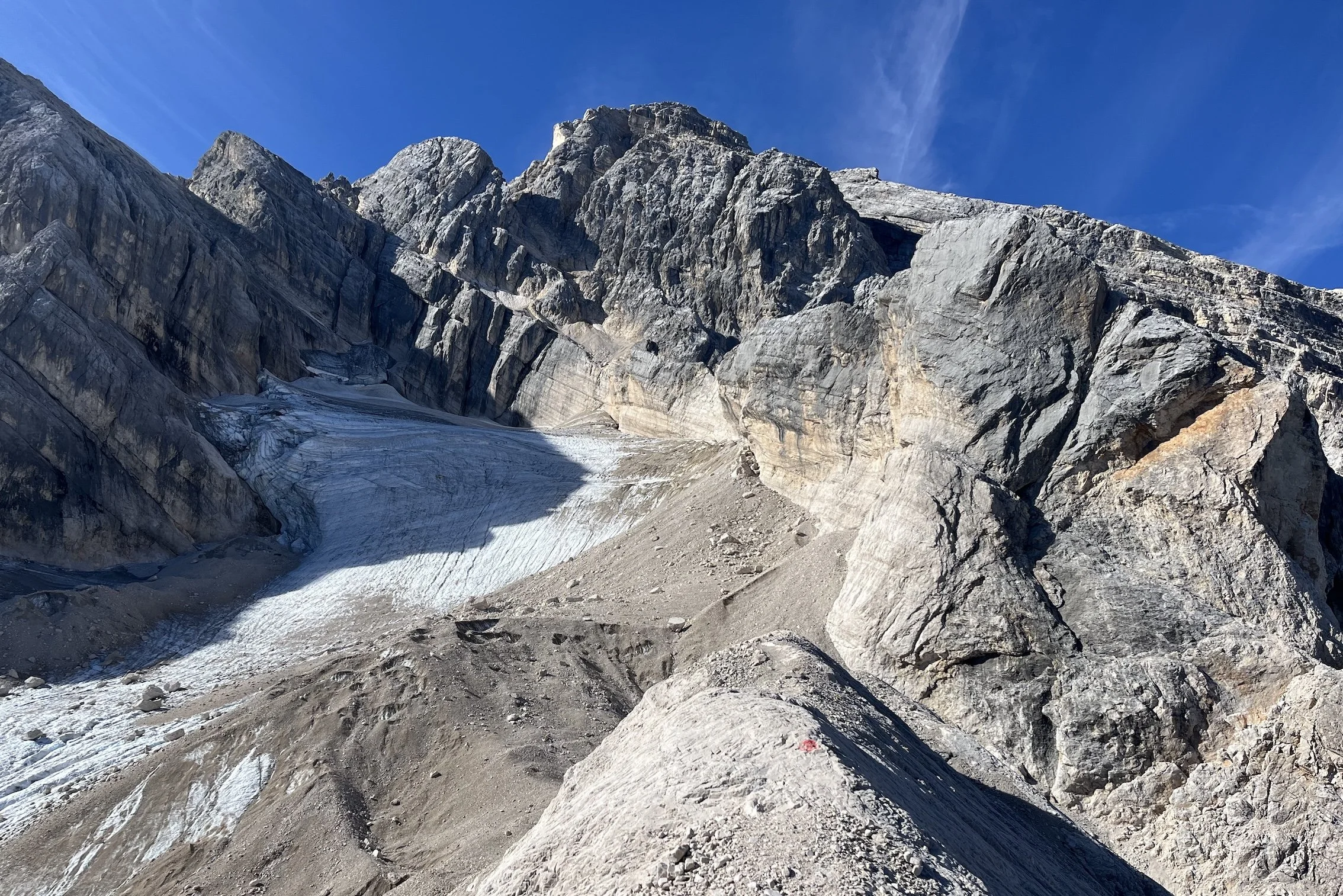
Non-ferrata variants
For those that wish to skip the two ferrata routes in the Southern section of Alta Via 4, you can choose the valley routes instead. Details of these variants can be found in our planning app.
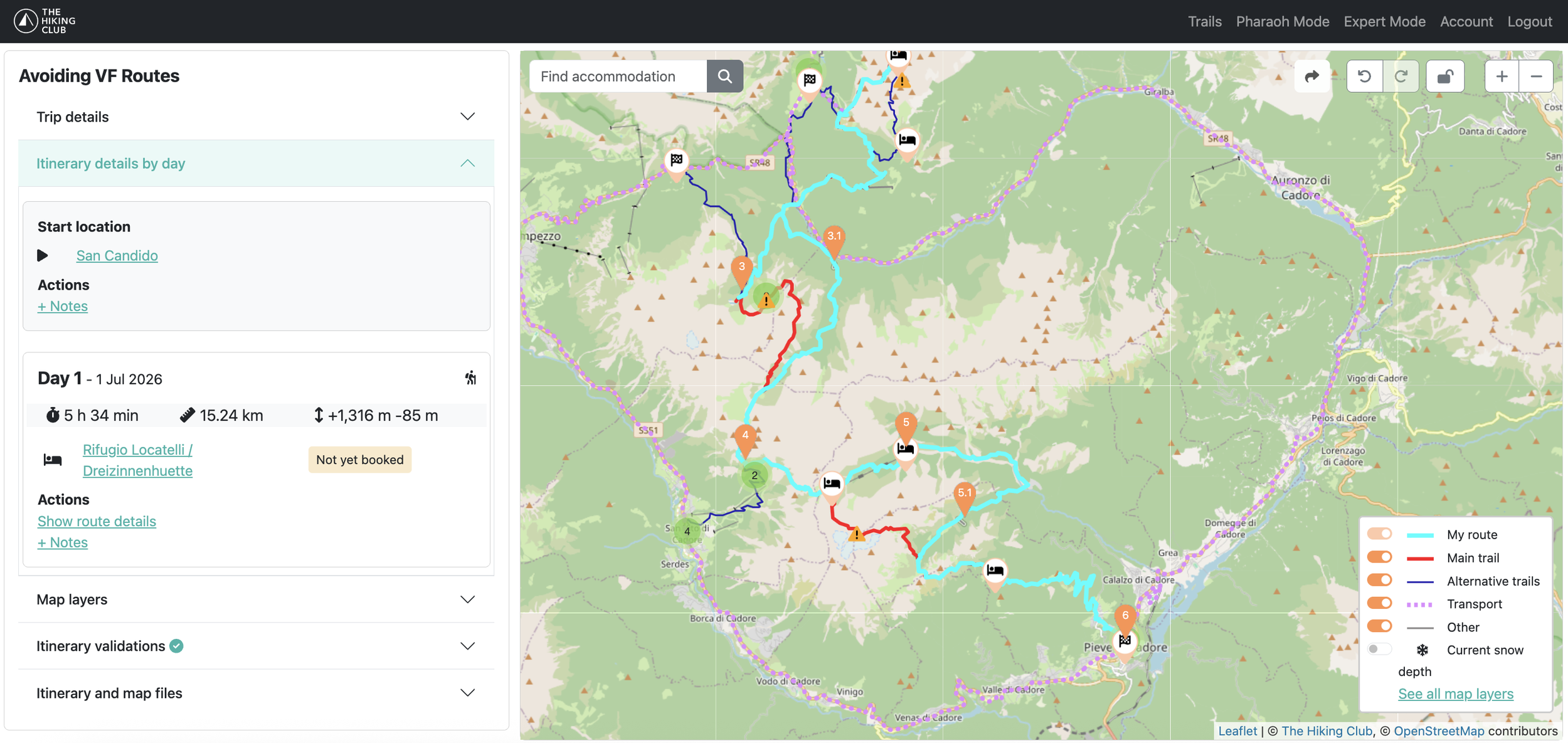
Sample itinerary for those that wish to skip Ferrata Vandelli and Ferrata Ghiacciaio in the Southern section of the Alta Via 4.
Do You Need Via Ferrata Gear for Alta Via 4?
It depends on which route variants you choose.
Via ferrata gear is required:
To complete Ferrata Vandelli and Ferrata Ghiacciaio in the Southern section of the classic “Alta Via 4
To complete add-on ferrata routes such as Ferrata Toblin, Ferrata Merlone or Monte Paterno.
These sections include sustained exposure, steep cable systems and technical terrain where proper via ferrata equipment is essential.
Via ferrata gear may still be helpful for:
hikers with limited exposure experience, nervous hikers, or those uncomfortable on cable-assisted trails.
Several sections of Alta Via 4 include exposed traverses and fixed cables even when not classified as full via ferrata routes - specifically in the Central section, including Sentiero Attrezzato Alberto Bonacossa.
Sentiero Attrezzato Alberto Bonacossa (North) trail with cable-assisted sections. Via ferrata gear is helpful for those that with limited exposure experience.
Can You Hike Alta Via 4 Without Via Ferrata?
Yes — it is possible to hike a modified version of Alta Via 4 without completing the main technical via ferrata sections. See our “non-ferrata” sample itinerary for more deails.
Hikers can choose alternative valley routes and non-ferrata variants that avoid:
Ferrata Vandelli,
Ferrata Ghiacciaio,
and some of the more exposed cable-assisted terrain.
While these alternatives skip certain remote alpine sections found on the classic high route, hikers can still experience many of the Dolomites’ most iconic highlights, including: Tre Cime di Lavaredo, Cadini di Misurina, and Lago Sorapis.
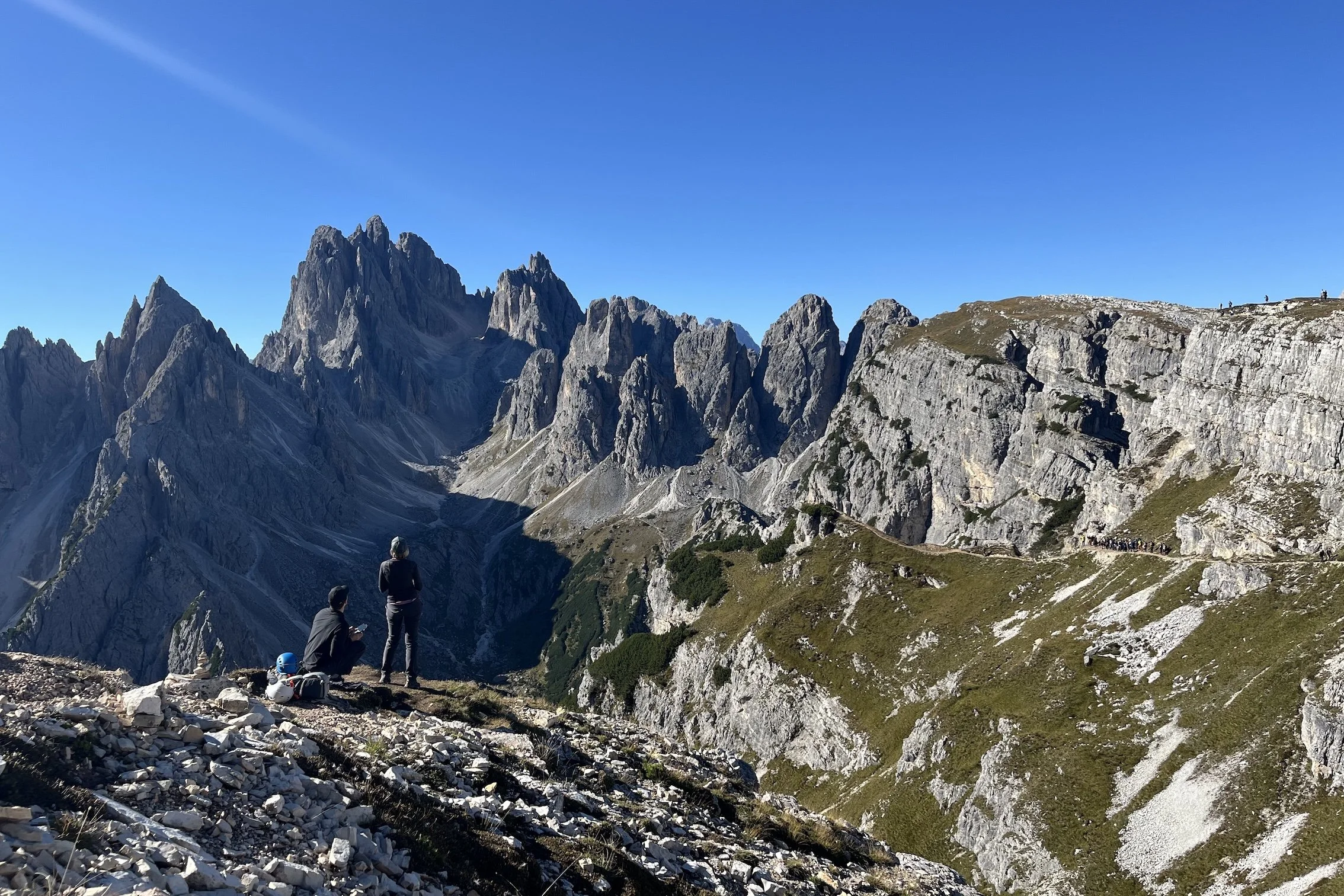
Cadini di Misurina viewpoint with Sentiero Attrezzato Alberto Bonacossa visible on the right.
The Hardest Sections of Alta Via 4
1. Ferrata Vandelli
Ferrata Vandelli is widely considered one of the hardest sections of Alta Via 4 due to the length and sustained nature of the route. Challenges include:
prolonged exposure,
steep cable systems,
technical terrain,
and physical fatigue over an extended period.
For many hikers, endurance becomes just as significant as technical ability.
Easier Alternative
Hikers who do not wish to complete Ferrata Vandelli can instead choose a valley alternative route.
While this bypass avoids one of the most technical sections of Alta Via 4, it also skips some of the unique alpine terrain and scenery accessed by the classic ferrata route.
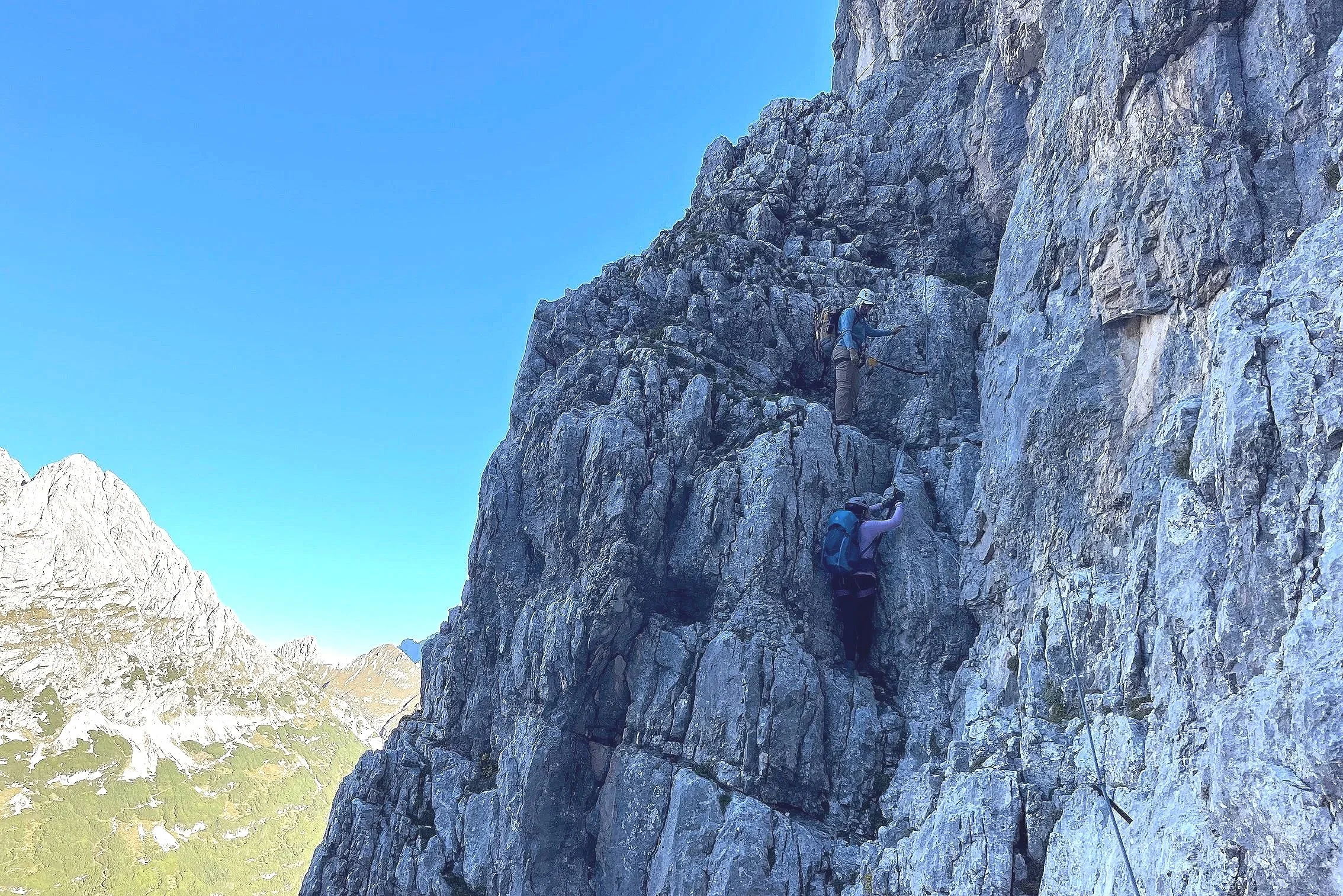
Ferrata Vandelli is a long, sustained vertical route that has prolonged exposure and technical terrain.
2. Sentiero Attrezzato Alberto Bonacossa (NORTH)
Route #117 — Sentiero Attrezzato Alberto Bonacossa (North) is another difficult section on Alta Via 4.
The northern section includes: exposed traverses, ladder systems, fixed cables, and narrow ledges.
Even experienced hikers often find this section mentally demanding due to the sustained exposure.
While some experienced alpine hikers may complete this route without ferrata equipment, less experienced hikers often feel far safer using via ferrata gear here.
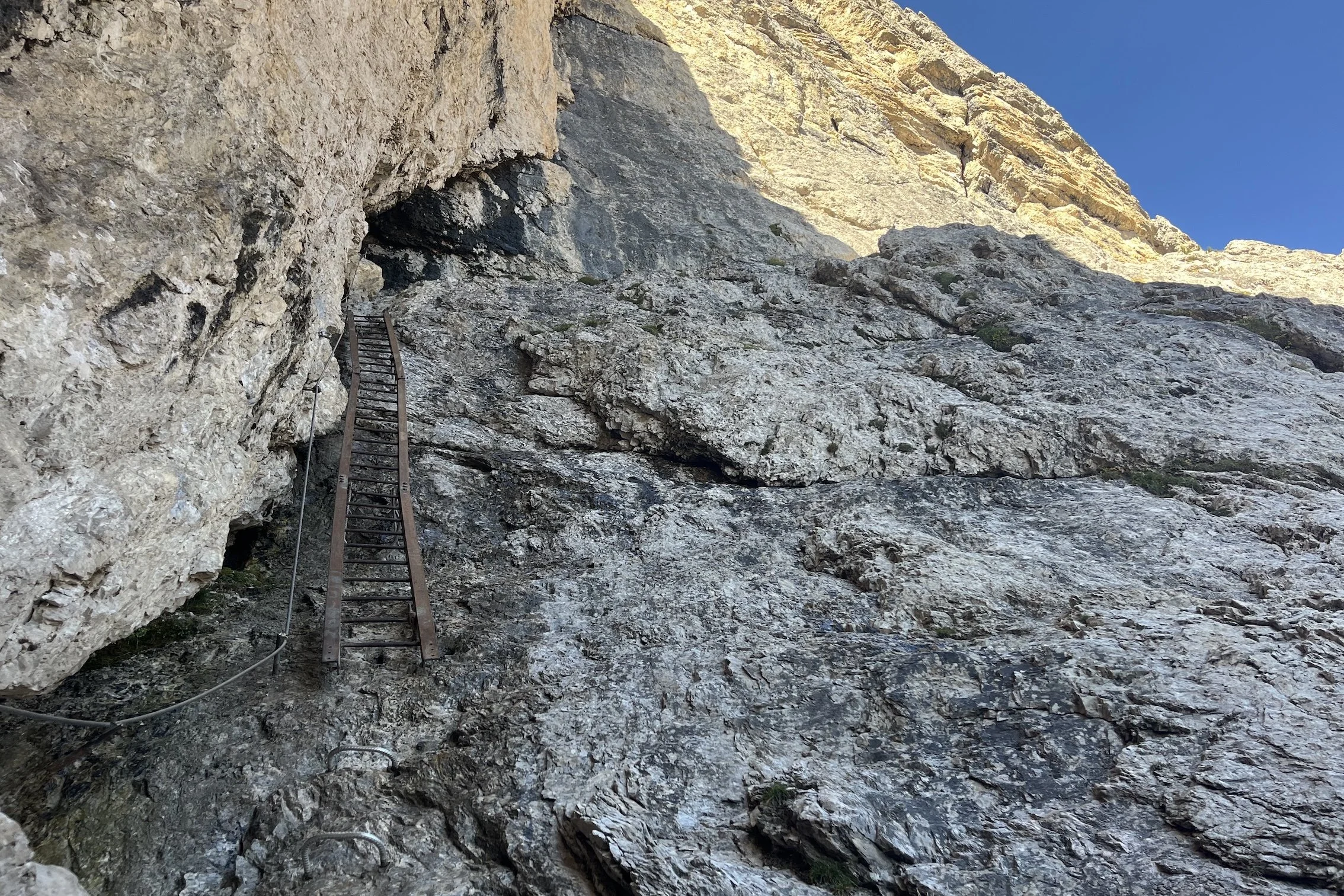
Sentiero Attrezzato Alberto Bonacossa (North) is a remote alpine route with varied terrain - exposed traverses, ladder systems, fixed cables, narrow ledges, and eroded trails.
3. Sentiero Attrezzato Alberto Bonacossa (South)
The southern section of Route #117 presents different challenges. Rather than ladders and steep cable systems, the main difficulties are: eroded trail surfaces, loose scree, unstable footing, and steep descents.
This section is often underestimated because it is less technically dramatic than the northern route, yet many hikers find the terrain physically exhausting and mentally draining.
Loose scree and erosion can also become significantly more difficult in wet weather.
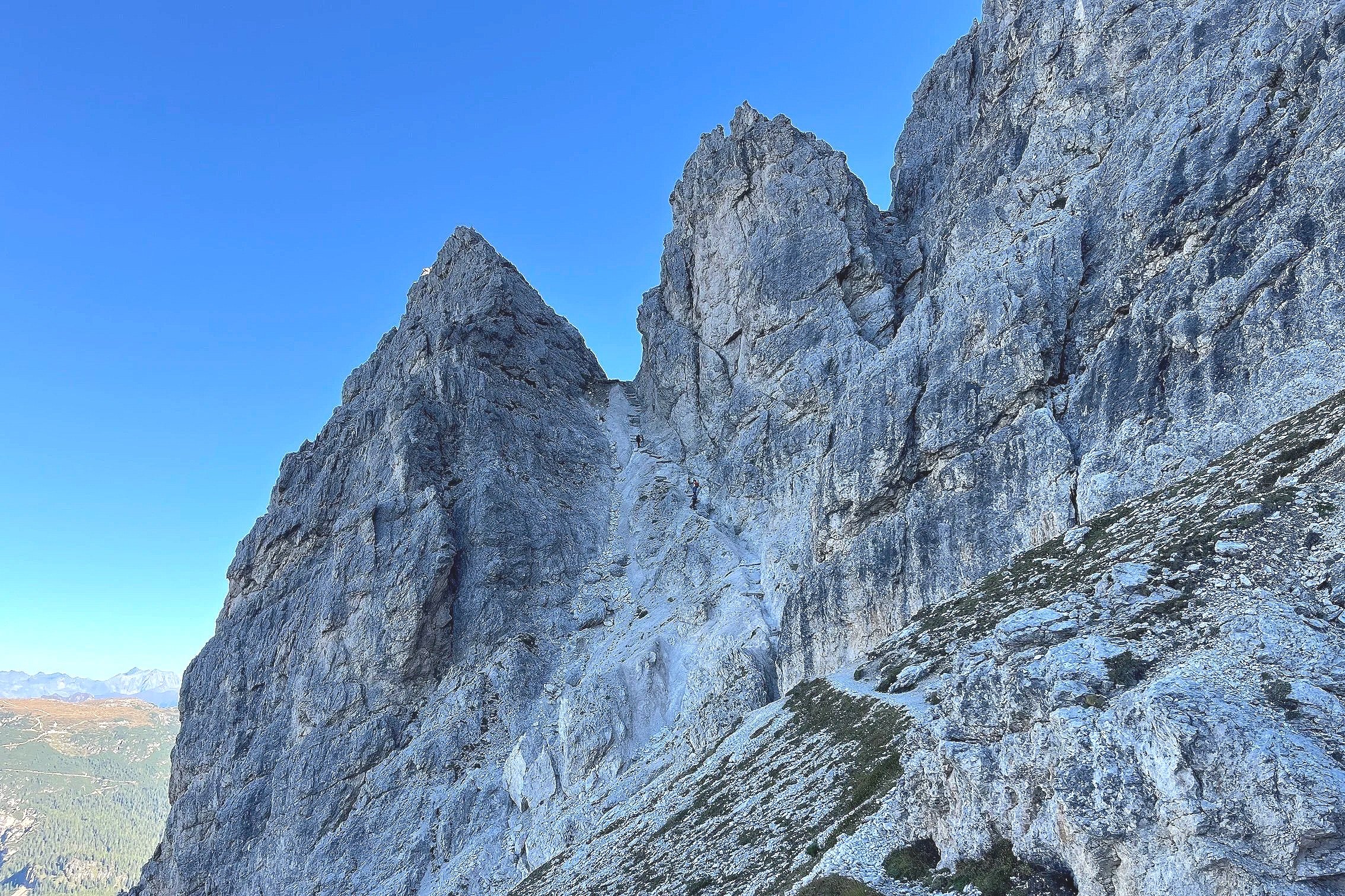
Sentiero Attrezzato Alberto Bonacossa (South) is a remote alpine route with varied terrain - eroded trail surfaces, loose scree, unstable footing, and steep descents.
How to Make Alta Via 4 Easier
One of the biggest advantages of Alta Via 4 is that hikers can tailor the route difficulty to match their experience and comfort level.
The classic route includes technical ferrata sections that access spectacular remote alpine terrain. However, hikers wanting a less technical experience can choose alternative non-ferrata variants while still visiting many of the route’s most famous highlights, including Tre Cime di Lavaredo, Cadini di Misurina and Lago Sorapis.
Hikers can make the route easier by:
choosing non-ferrata alternatives,
avoiding Ferrata Vandelli and Ghiacciaio,
selecting valley variants,
skip sections using transport,
shortening stages,
hiking later in summer when snow has melted,
and using route-planning tools to customise the itinerary.
Our Alta Via 4 planning app helps hikers compare ferrata and non-ferrata variants so they can choose a route that matches their experience level without missing the major highlights of the Dolomites.