Regulation is coming to one of Europe's most popular mountain hikes. Here's how to plan your Tour du Mont Blanc (TMB) in line with the proposed new rules — and the spirit the mountains are asking for.
- A booking for every night — refuge, designated bivouac, etc — with checks along the trail.
- Wild camping ends — camp only in registered sites (already in force in Italian section and the French reserves).
- Wind-back of excessive luggage and people transfers — reduce vehicles on mountain roads
What to do now? Plan a continuous, mostly-on-foot route, staying at accommodation along the trail. Set alerts now to book the moment 2027 reservations open.
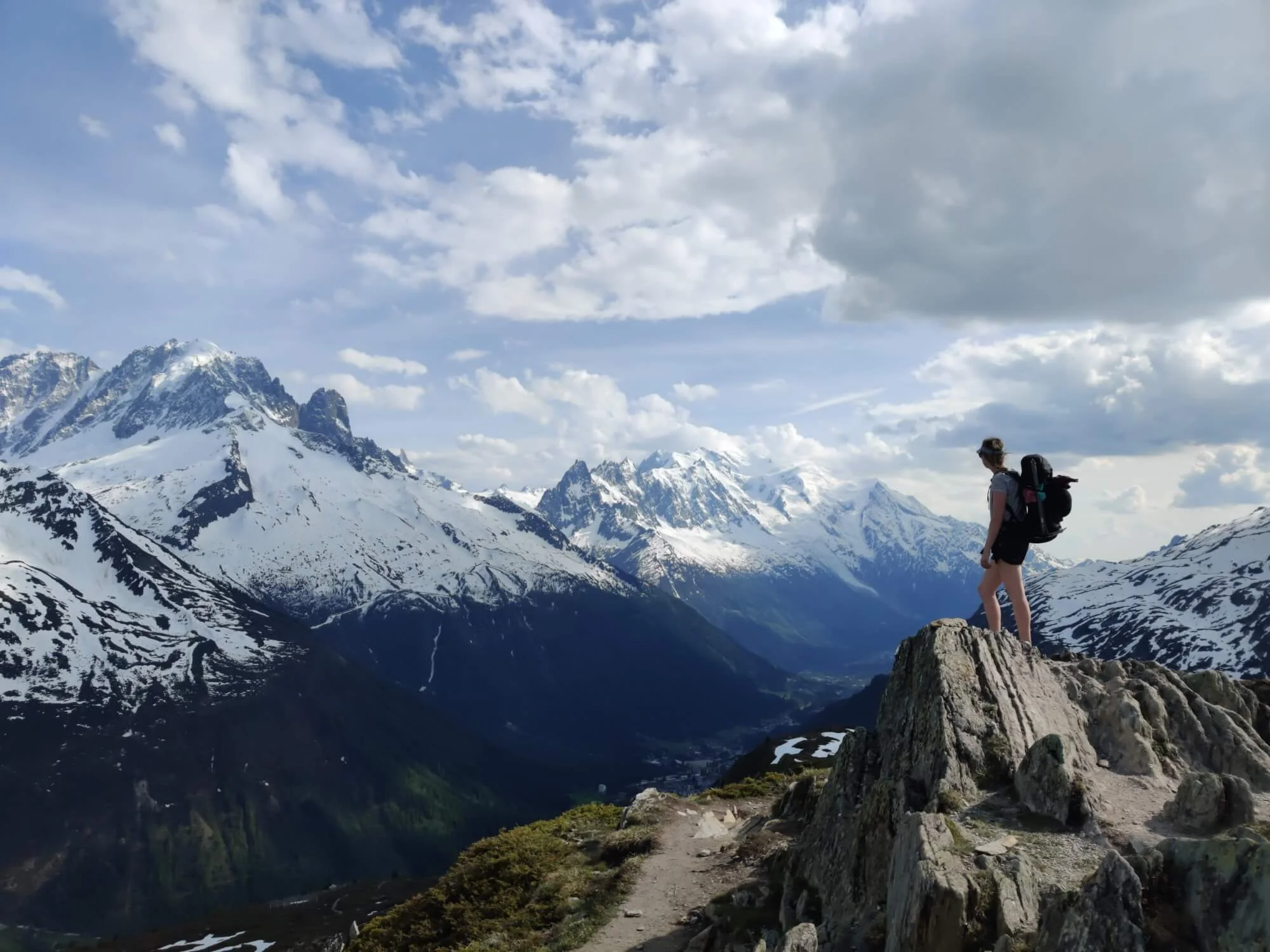
Aiguillette des Posettes on the Tour du Mont Blanc
The Tour du Mont Blanc is about to change
It is estimated that 78,000 people now hike the Tour du Mont Blanc over the summer — nearly double the estimate from before Covid. That success has a cost: queues along the trail, crowded camping, overwhelmed toilets, and vehicles pushing ever deeper into the mountains — turning the trek, in the words of the Mayor of Saint-Gervais, into "a tourist product consumed à la carte."
In 2025 the mayors of the French communes the trail crosses began preparing a regulation — modelled on the system that has governed the ascent of Mont-Blanc since 2020. For a 2027 Tour du Mont-Blanc, expect the shape of it to include:
A reservation for every night — in a refuge, designated bivouac areas, etc.
A complete end to wild camping — campgrounds or designated bivouac sites with registration only.
An end to "half-by-taxi" trips — restrictions on luggage and people transfers as part of the Tour du Mont Blanc.
Please note: The exact rules and coverage across the three countries are still be discussed — treat this as the direction of travel, not the final text. We'll update this series as detail is confirmed.
The goal: bringing the trail back to its "real capacity"
The regulation isn't about stopping people walking the Tour du Mont-Blanc — it's about bringing the yearly numbers back down to what the trail and its huts can actually absorb. That's Peillex's phrase: "real capacity" — matching the number of walkers to the beds/bivouac areas, the facilities and the fragile ground that have to carry them.
Given the refuge capacity hasn't materially changed since Covid, where has the extra foot-traffic come from that they want to reduce? Research and commentary point to three sources:
- Hikers who spend most of the trail camping rather than in refuges.
- Hikers and trail runners completing the Tour at speed.
- Those using transfers to skip sections and sleep in hotels off the trail.
In each case, it's possible to avoid needing a bed in the stretches with the least accommodation — so refuge capacity has not been acting as a natural ceiling on how many people can complete the Tour anymore.
Since The Hiking Club was founded nearly 10 years ago, we've helped thousands of hikers plan and book their own Tour du Mont Blanc and Alpine hut-to-hut adventures. While most of our customers already plan trips that align closely with the proposed 2027 regulations, our platform also supports a wide range of hiking styles—from camping itineraries and fastpacking trips to routes incorporating gondolas, cable cars and public transport.
Looking at the itineraries our members created for the 2026 season, some may have been impacted been impacted by the proposed new rules.
We see it as our responsibility to make sure hikers using our platform have an itinerary that sits comfortably within the rules local authorities implement — and to help them hike in the spirit they're asking everyone to return to. Watch this space.
what should you do if you’re planning the Tour du Mont Blanc for 2027?
We've reviewed the articles and transcripts of the interviews given on TMB regulation, and there are seven steps early self-guided planners can take when building an itinerary in response to the proposed new rules.
Book every night ahead of time
This may sound obvious given the popularity of the Tour du Mont Blanc, but the single biggest change for 2027 is that a reservation will be expected for every night. Given the mandatory registration and capacity limits at French bivouac sites in the Les Contaminies-Mont Joie and Aiguille Rouges nature reserves, it’s possible that those sleeping by tent will also have to book every night in permitted sites/campgrounds ahead of time. If they implement the regulation in the same way it was done for the Mont Blanc summit, hikers will be required to produce proof of accommodation bookings with checks occurring along the trail.
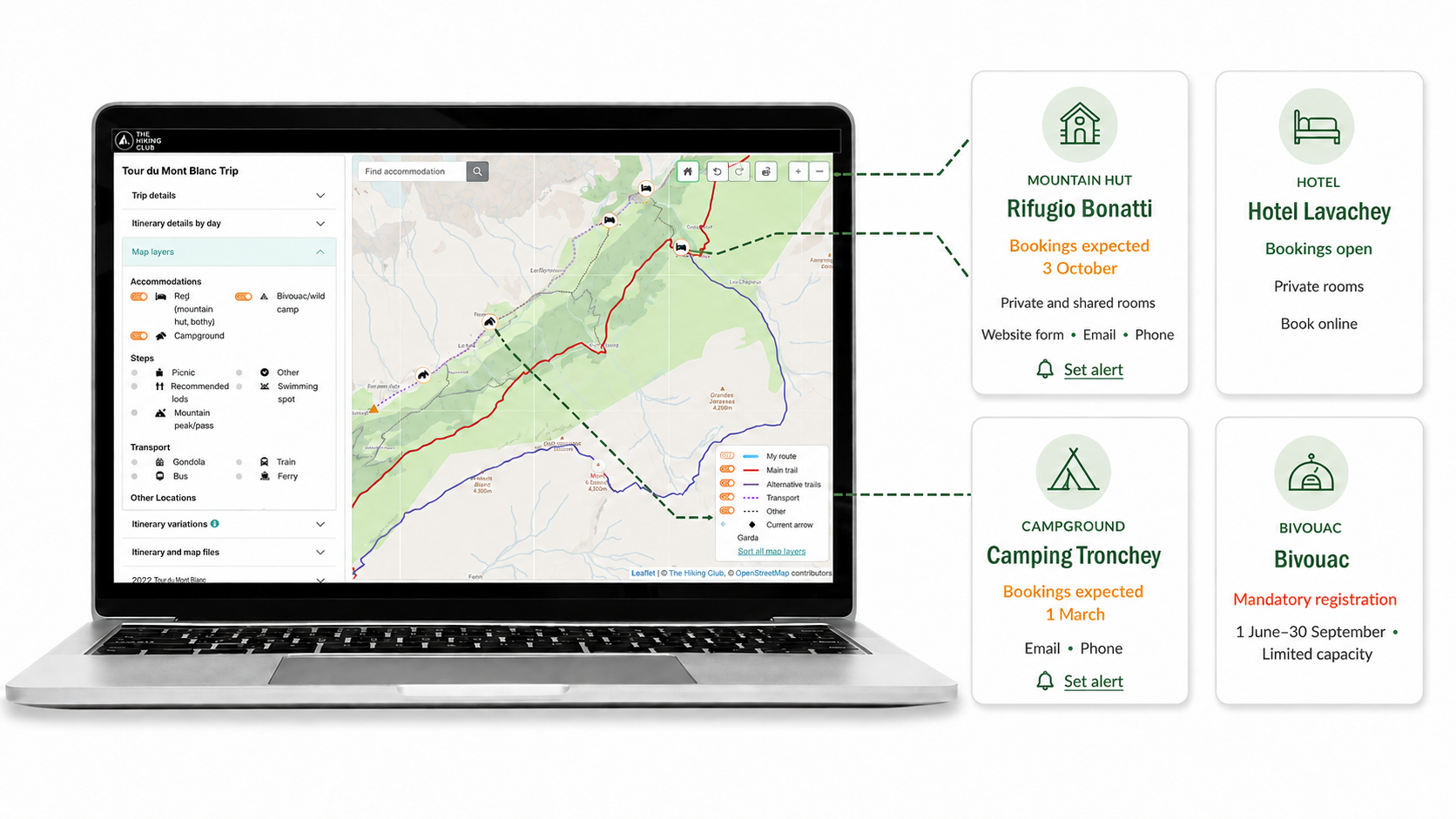
Be notified: We track when properties have started accepting reservations in the past, and monitor for when they actually do for your hiking year - alerting you to book.
Camp only where it's allowed
This also may also sound obvious, however, on a single night in August 2025, surveyors counted 125 tents pitched under a 'camping interdit' (camping forbidden) sign between Les Mottets and La Seigne (Amis de l'UTMB report). There will be zero tolerance of wild camping and the establishment of a "green brigade." is being worked on to provide enforcement of the rules along the Tour du Mont Blanc.
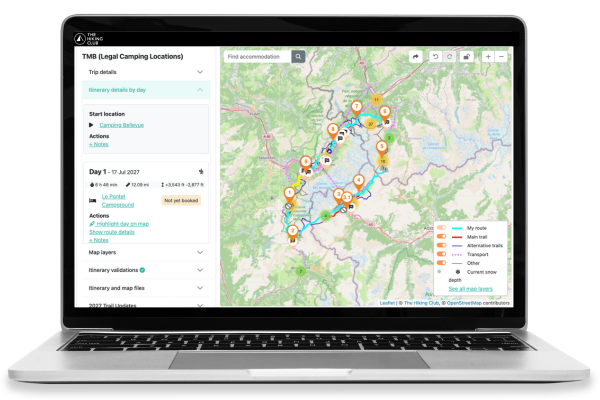
Camp legally: Build a camping itinerary between campgrounds and permitted bivouac locations
Reasonable baggage transfer only
Peillex isn't proposing to ban luggage transfer — in his words, "il ne s'agit pas d'interdire, mais de revenir à quelque chose de raisonnable" ("it's not about banning, but returning to something reasonable"). What he wants to end is the excess: full cases — "de véritables malles… avec leur trousse de toilette, leur sèche-cheveux" (“real trunks, with toiletries and hair-dryers”) — hauled refuge to refuge, sometimes by 4×4 driven up the mountain.
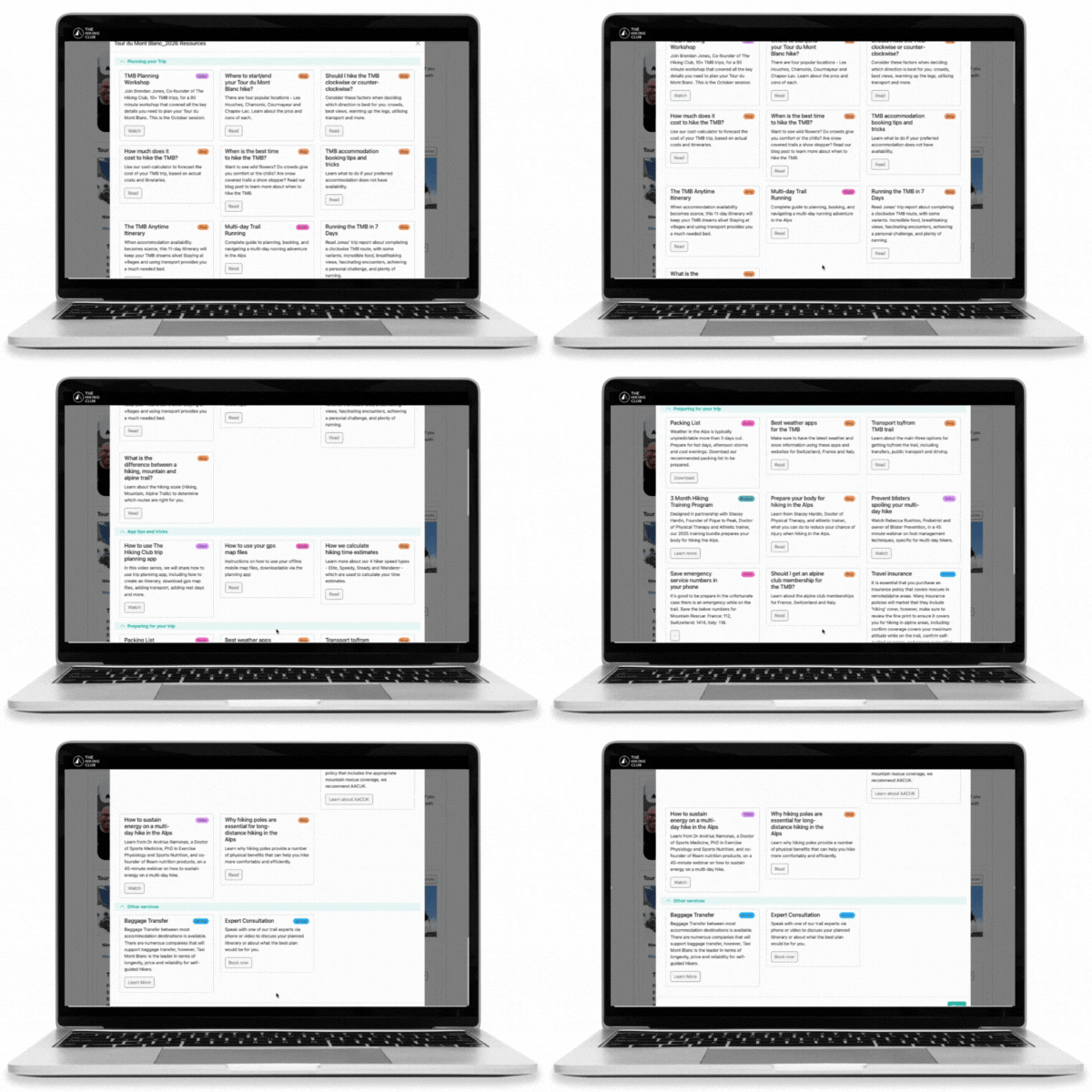
Resource library: The Hiking Club resource library helps to prepare hikers for their journey, including a comprehensive packing list, luggage storage and transfer recommendations. Therefore hikers can carry with everything they need, have a small bag meet them with essentials along the way if they need, and leave their big case at your starting/finishing hotel.
Plan an itinerary with limited or no transport
Related to your bag, but a separate practice, is skipping the walking itself — and this one Peillex wants stopped, not just reined in. He was blunt: "il y a des gens qui font croire qu'ils font le Tour Mont-Blanc mais en font la moitié en taxi" ("some make out they're doing the Tour du Mont-Blanc but do half of it by taxi"), adding "il faut que cette pratique cesse" ("this practice must stop"). Some transport is completely normal — around 75% of hikers take the bus or train on the flat Chamonix–Les Houches link, and 50% take the Bellevue cable car to start — but an itinerary held together by lifts and shuttles isn't done in the spirit of the Tour du Mont-Blanc.
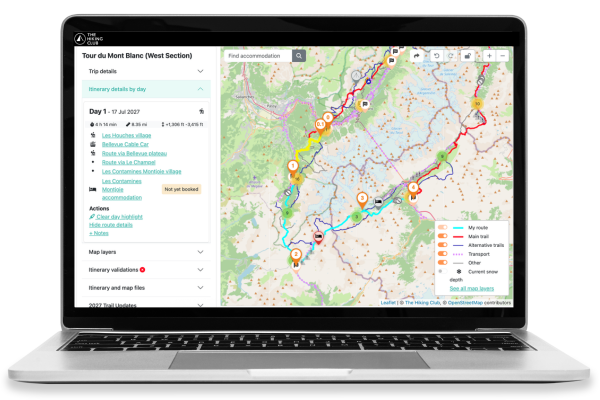
Resort and public transport: If you don’t have the time or the fitness to complete the whole Tour du Mont Blanc in one go, plan to do a more continuous section of the trail, then return another time to complete the trail…rather than a whistle stop tour of the whole massif
Arrive genuinely prepared
The mountains have their own codes, and Peillex's sharpest worry is people arriving to treat a serious alpine circuit like a stroll: "il suffit d'une paire de chaussures, d'un short et d'un tee-shirt pour devenir montagnard" ("people think a pair of trainers, shorts and a tee-shirt is all it takes to become a mountaineer"). Yet most hikers plan from scattered sources — 72.5% rely on Facebook groups, while only 4.2% consult the Chamonix Office de Haute-Montagne, the official mountain-information service (Amis de l'UTMB, 2025). This year, The Association of Refuge and Gîte Wardens of the Tour Mont-Blanc have implemented an excellent social media campaign (see Instagram and Facebook) to educate hikers. The information to prepare properly is out there — make sure you get it from credible sources and authorities.
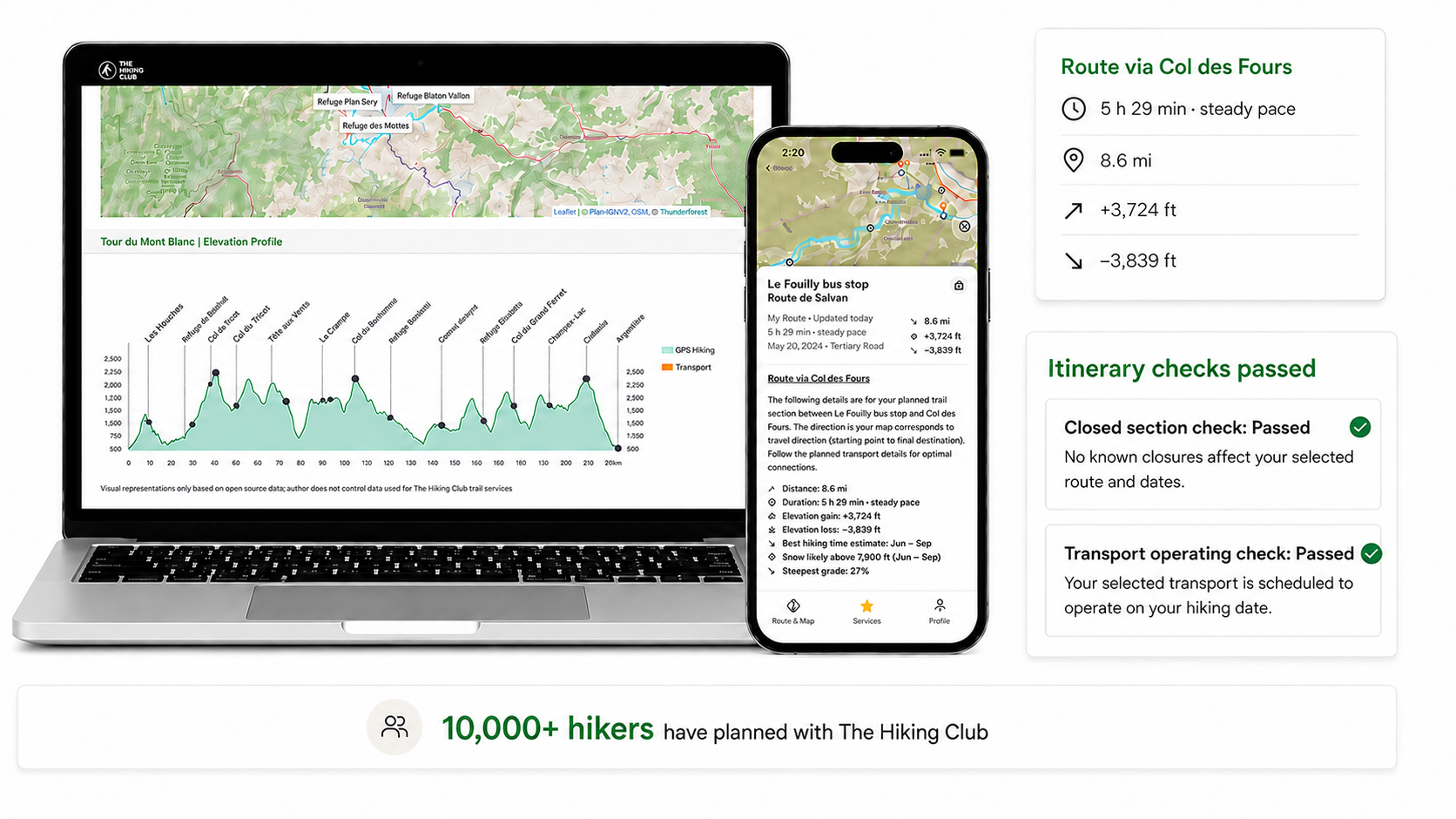
An achievable itinerary: Build your plan from trusted sources — an itinerary with verified trail stats is the foundation to start your preparations
Respect the mountain and the people who live on it
You're a guest here — and Peillex means it literally: "Respect, c'est déjà que l'on n'est que des invités et qu'on n'a pas à imposer ses propres règles, ses propres envies, ses propres caprices" ("respect starts with knowing we're only guests — we don't get to impose our own rules, wants or whims"). Close gates behind you, keep well clear of the livestock and their guardian dogs (patous), and take every scrap of rubbish out with you — 36% admitted using the open hillside as a toilet (Amis de l'UTMB, 2025) and there is plenty of commentary about tissue paper being seen along the trail. The strain on the trail's facilities is one of the reasons regulation is coming at all.
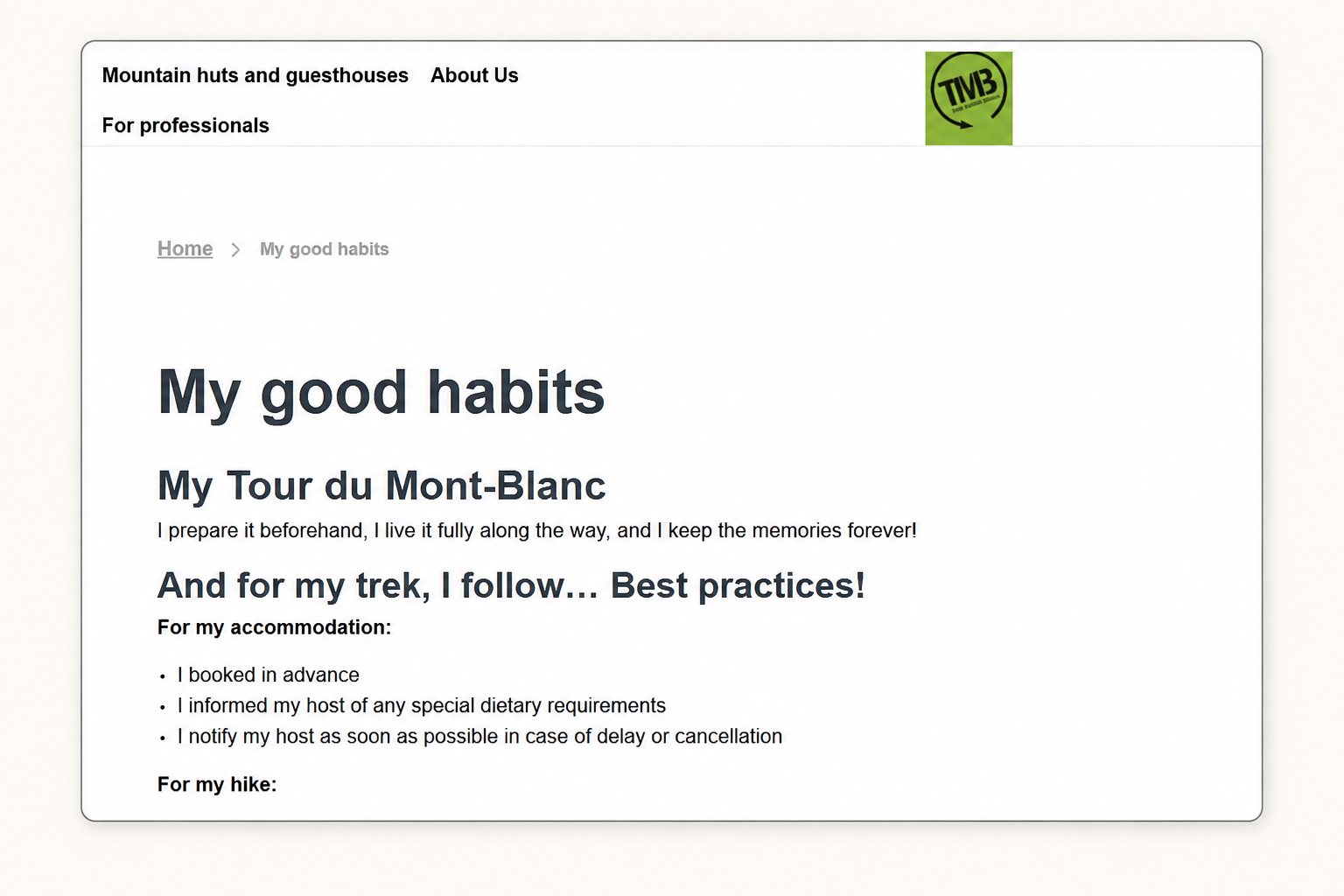
TMB Etiquette: See advice here from the Association of Refuge and Gîte Wardens of the Tour Mont-Blanc and following their social handles (IG and FB) for more information.
Time it to miss the crush
Not every day on the TMB is equally busy — and the peak is unmistakably high summer. Some pinch-points logged staggering numbers last season: 121,000 passages at Arp Nouva, 97,000 at Lac Combal, 96,000 at Nant Borrant (Amis de l'UTMB, 2025). Peillex asks, pointedly, "quel plaisir y a-t-il à faire la queue sur la descente du col du Tricot ?" ("what pleasure is there in queuing on the descent of the Col du Tricot?"). Although even shoulder-season dates in June and September have been busy in recent years, they don’t carry the same foot traffic to day hiking sites which can easy the overall burden on the trail.
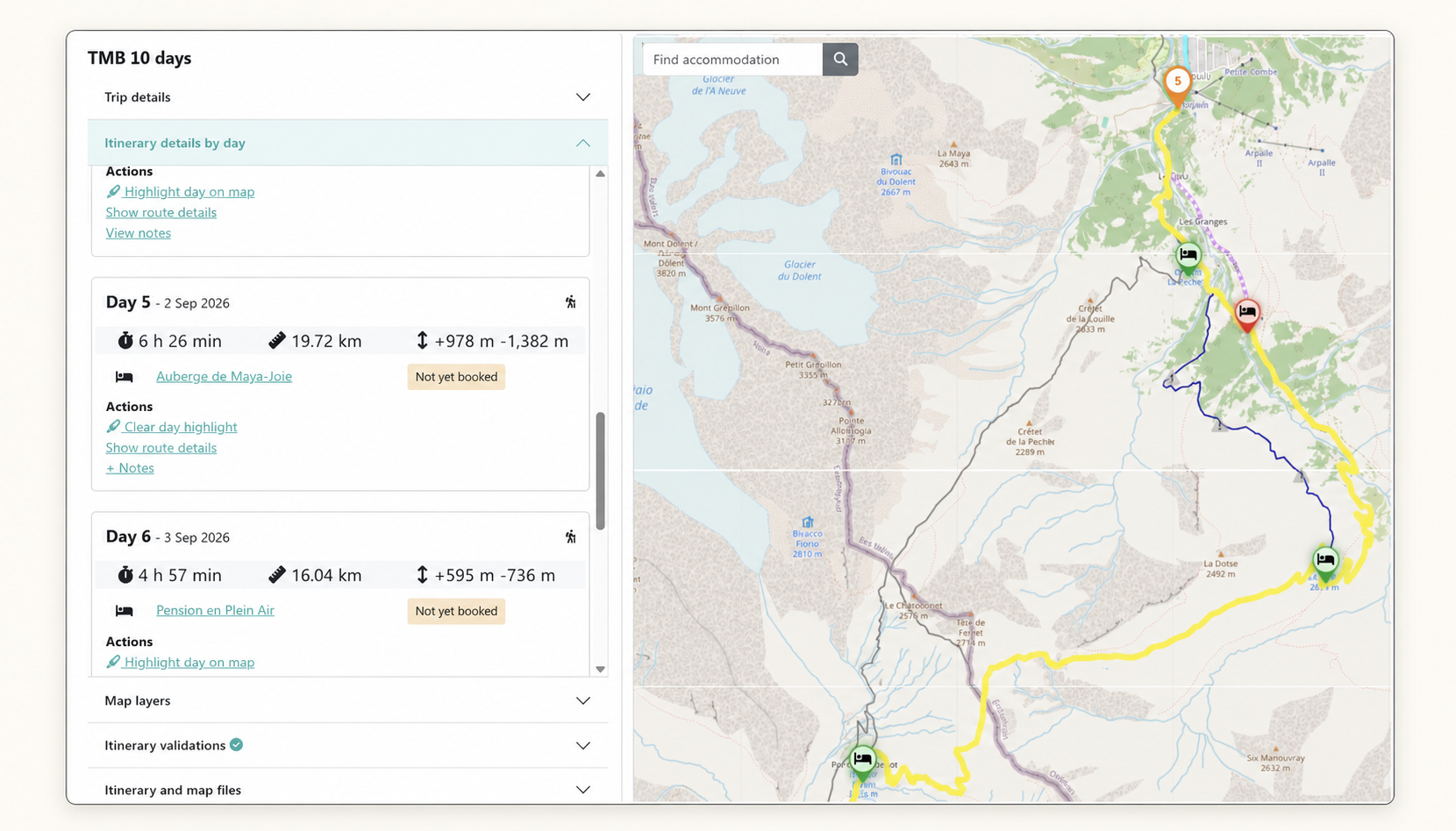
Flexible dates: If your dates are flexible, targeting June or September rather than the July–August peak can give you a better chance at securing accommodation and reduce pressure on the trail at popular day hiking spots too.
Do you need a permit or booking to hike the Tour du Mont Blanc in 2027?
There's no permit required now or proposed, but from 2027 you should expect to need a confirmed booking which will act like one — refuge, designated bivouac area, etc — modelled on the Mont-Blanc summit system, with checks along the trail.
Can you wild camp on the Tour du Mont Blanc?
Increasingly no. Wild camping and bivouac are already banned along the Italian (Courmayeur) section and restricted in the French nature reserves. The direction of travel is camping only in registered sites, booked ahead. See current rules on bivouacing along the trail here here
How many days does the Tour du Mont Blanc take?
The classic route is usually hiked in around 10–11 stages. A very fit and experienced hiker could walk the trail in 6 days - anything shorter generally requires some jogging ut a steadier 10–11 days gives shorter stages, more weather margin and a better experience.
When do Tour du Mont Blanc 2027 bookings open?
For the 2026 season, the main booking platform for ~43 huts went live on Oct 15 2025 - the date has not been shared for 2027 season, however, some have started accepting bookngs already and other hotels and refuges along the trail go live at their own times - historically in the fall but some as late as April 1st. Set availability alerts so you can book the moment each place opens — July and August at popular huts fill on the day of go-live.
Do you need a guide for the Tour du Mont Blanc?
No, it is not a requirement. However, you should come prepare with adequate experience to undertake a 10 day alpine hike. If do not have or wish to learn the skills necessary before your Tour du Mont Blanc, then going with a guide is best.
When is the best time to hike the TMB?
Mid-June to mid-September - this is when all of the accommodation is open along the trail. Peak is July and August. If planning for June, snow coverage on the trail can impact the difficulty and risk of your journey.
The Tour isn't closing — it's asking to be Hiked with care
None of this is about keeping people off the Tour du Mont-Blanc. It's about returning it to something the mountain, its refuges and the people who live there can sustain — its real capacity.
Book your nights, carry your own pack, walk the stages, and you'll not only stay on the right side of the proposed new rules — you'll have the better trip for it.
- Brendan Jones, Co-founder of The Hiking Club