
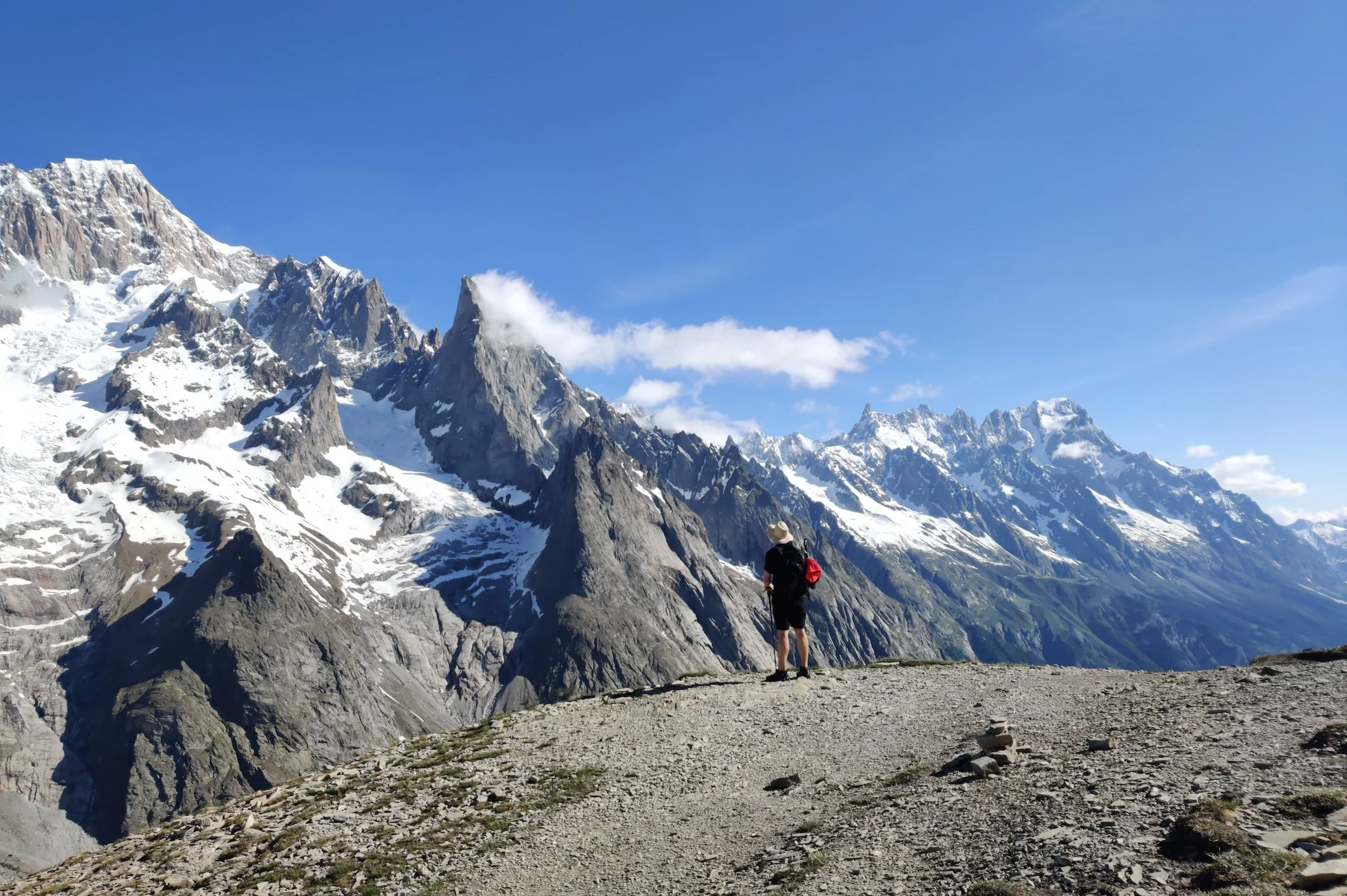
Inspired by UTMB? A multi-day trail run around Mont Blanc is your chance to experience the mountains associated with one of the world’s most famous trail-running races—at your own pace.
Whether you’re an aspiring trail-running athlete, planning a recce or training loop, or dreaming of following in the footsteps of Kilian Jornet and Courtney Dauwalter, a journey around Mont Blanc is one to remember.
Explore our sample Tour du Mont Blanc itineraries to find a starting point that suits your fitness, experience and desired challenge. Personalise your daily stages and overnight stops, with optional luggage transfers at suitable accommodation locations to lighten your load.
These itineraries follow the Tour du Mont Blanc hiking route and selected alternatives, rather than necessarily matching the official UTMB race course.
Can you trail run the Tour du Mont Blanc?
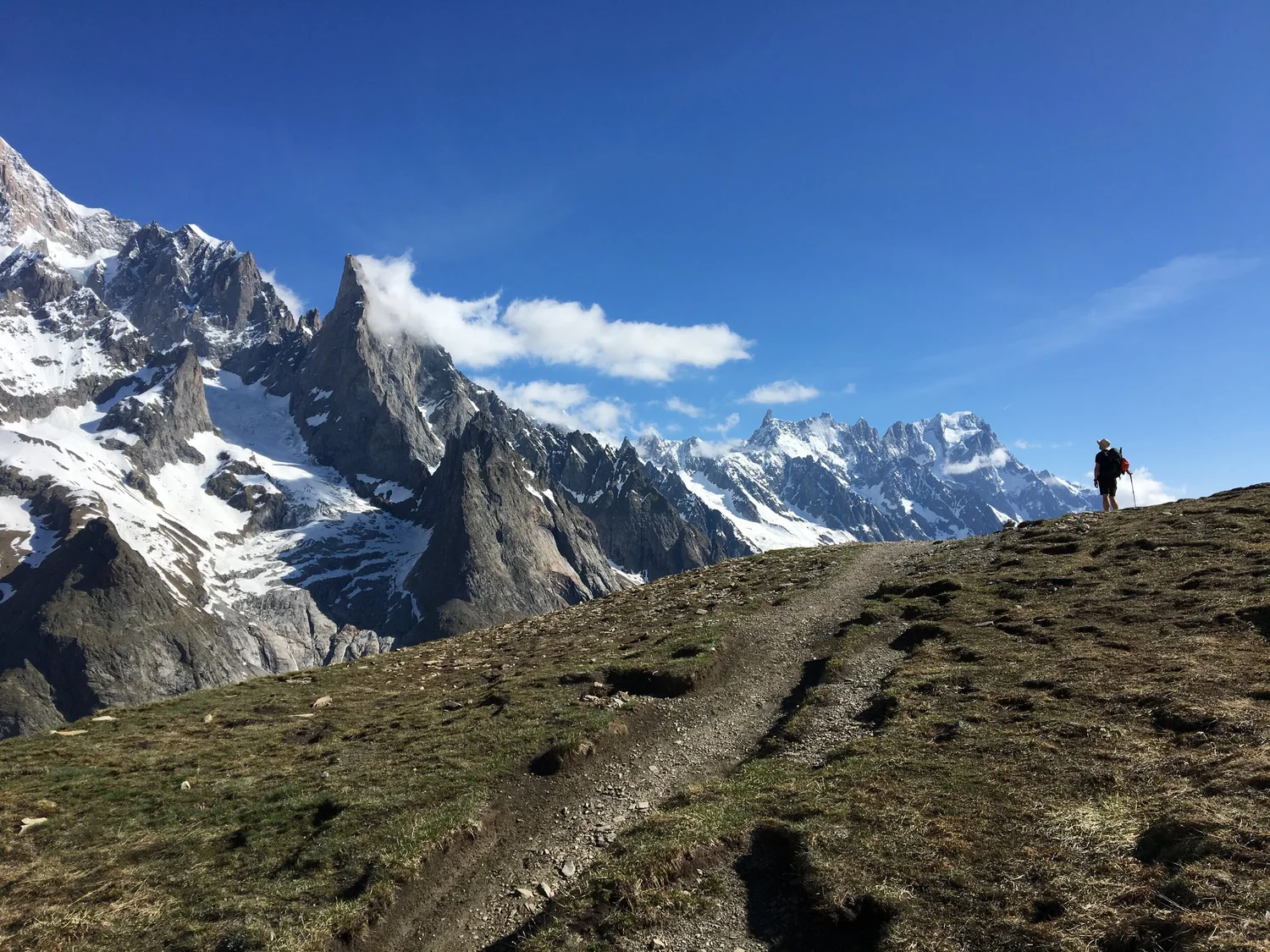
Yes. Experienced mountain runners and fastpackers can combine running and hiking between overnight stops on the Tour du Mont Blanc.
Think of it as a multi-day mountain journey rather than a continuous run. Steep climbs, rocky descents, weather and tired legs can all slow your pace. Some sections call for careful hiking, even for strong runners.
Staying in huts, hotels and other accommodation lets you eat and recover along the way without carrying camping equipment.
How many days do you need to run the Tour du Mont Blanc?
Four, five and six days offer different starting points. All three examples below begin and end at Les Houches and travel counterclockwise, but their route choices and overnight stops differ.
Swipe to compare →
| Example | Daily distance | Daily ascent |
|---|---|---|
| 4-day Fastpacker | 40km / 24.8mi | 2,504m / 8,215ft |
| 5-day Fastpacker | 33km / 20.5mi | 2,033m / 6,670ft |
| 6-day Fastpacker | 27km / 16.8mi | 1,615m / 5,300ft |
Approximate daily averages from these specific templates. Individual stages vary. The examples are not necessarily the same route divided into different numbers of days.
Examples, not fixed packages. Explore different durations and routes, then adapt your stages in The Hiking Club platform around your experience, desired difficulty and confirmed accommodation.
What does a 4-day TMB itinerary involve?
Four days is a concentrated mountain challenge. This example combines long distances with substantial climbing on consecutive days, making it a demanding starting point for experienced mountain athletes.

Consider this style if: you are comfortable repeating very long mountain days and recovering for another substantial effort the next morning.
Explore the fastpacking examples →
What does a 5-day itinerary involve?
Five days spreads the journey over an additional stage. It remains a major physical undertaking, while reducing the average daily distance and ascent compared with the four-day example.

Consider this style if: you want sustained long days with a lower average workload than the four-day example.
Compare the fastpacking examples →
What does a 6-day itinerary involve?
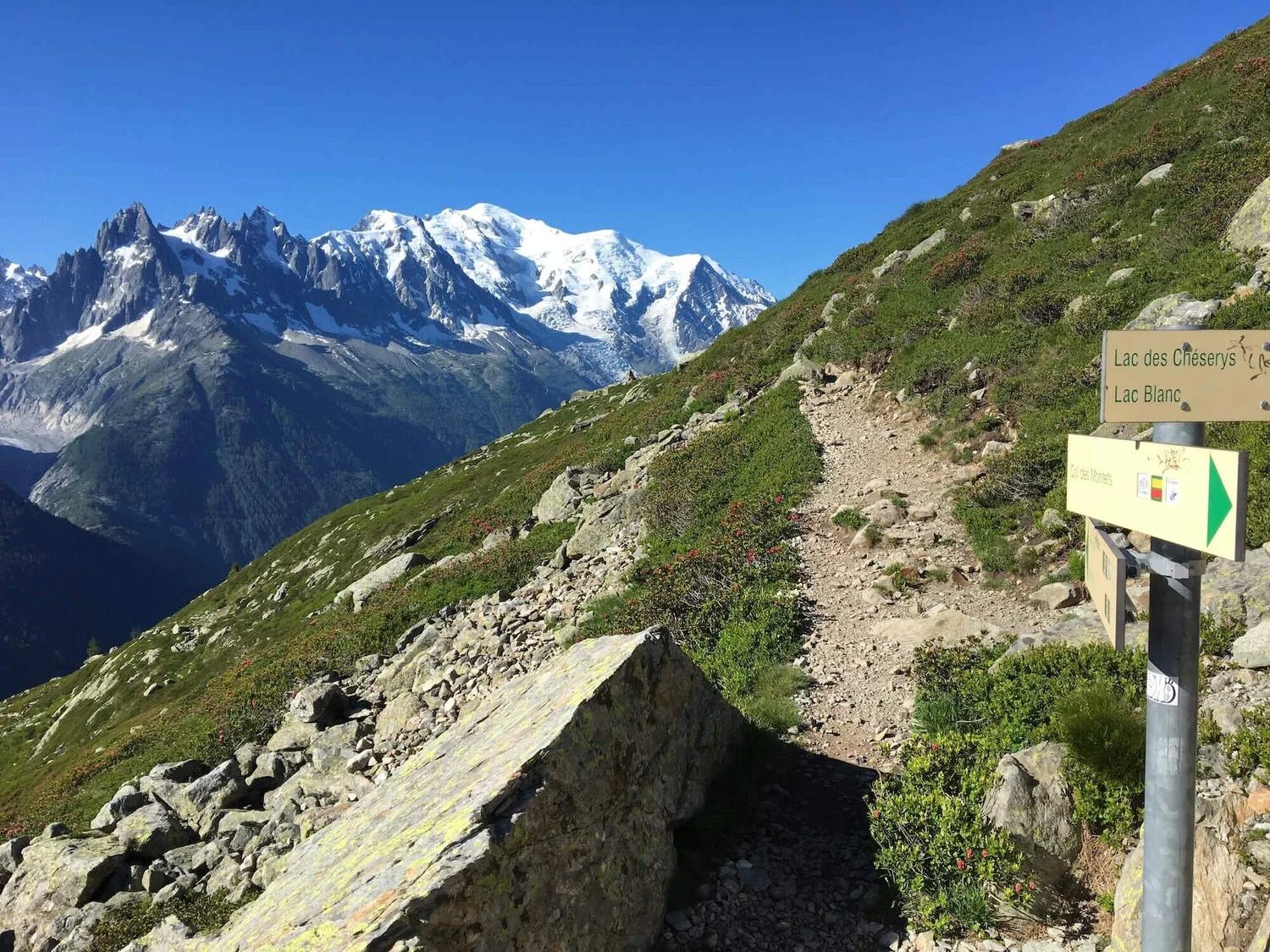
Six days reduces the average daily workload again. It is still a demanding multi-day mountain adventure, with significant ascent and descent throughout the trip.

Consider this style if: you want more room to combine running, hiking and breaks while maintaining substantial daily progress.
Find your itinerary starting point →
How do you choose the right difficulty?
Start with the effort your group can repeat over several days, rather than your fastest single-day performance. Review the longest stages as well as the averages.
- Distance and climbing: compare the route with recent mountain days you have completed.
- Descending: consider how your legs and confidence hold up on long, rocky descents.
- Recovery: allow for eating, sleeping and preparing for the next stage.
- Terrain and conditions: route alternatives and weather can change the challenge.
- Your priorities: decide how much time you want for food stops, photographs and enjoying the landscape.
You can adjust the difficulty by changing your duration, start point, route choices or overnight stops. A shorter section of the TMB is another option if you want fewer days without compressing the full circuit.
Can you arrange luggage transfer while trail running the TMB?
Luggage transfer may be possible between suitable accommodation locations, allowing you to carry your mountain essentials while your main bag travels separately.
The three examples above include luggage-transfer options, but a template does not reserve or guarantee a service. Confirm the exact properties, dates, collection arrangements and delivery coverage with your provider.
If you choose an overnight stop that cannot receive luggage, arrange for your bag to go ahead to a later accessible stop and carry the kit you need until you meet it again.
Plan accommodation and luggage access together. Changing an overnight stop can change whether a transfer works. Accommodation and luggage services are booked separately from platform access.
Read the TMB luggage-transfer guide →
How do you plan accommodation for a multi-day TMB run?
Map each overnight stop against your intended daily effort. Check the approach to the property, the following morning’s departure, meal arrangements and expected arrival time.
If a preferred property is unavailable, review both neighbouring stages before choosing an alternative. A change of accommodation can add distance, climbing or a different route.
Check TMB accommodation booking status →
Can you save money by planning your own TMB trail-running trip?
Planning independently can reduce the cost of your trip. Instead of paying an agency to organise a package, you choose your itinerary and book accommodation and any luggage transfers directly with the providers.
The Hiking Club gives you itinerary examples and planning tools to compare daily stages, explore accommodation and prepare your personalised route. You keep control of where you stay, which services you book and how you spend your budget.
Pay for the services you want. Add luggage transfers where they work for your route, choose your preferred accommodation and adjust the itinerary around your group—without needing to purchase a complete tour package.
Your saving depends on the trip you build and the agency package you compare it with. Check what each option includes: accommodation, meals, transfers, navigation and support. Planning independently also means managing your own reservations and changes.
Compare The Hiking Club platform access options →
What can a real TMB running trip look like?
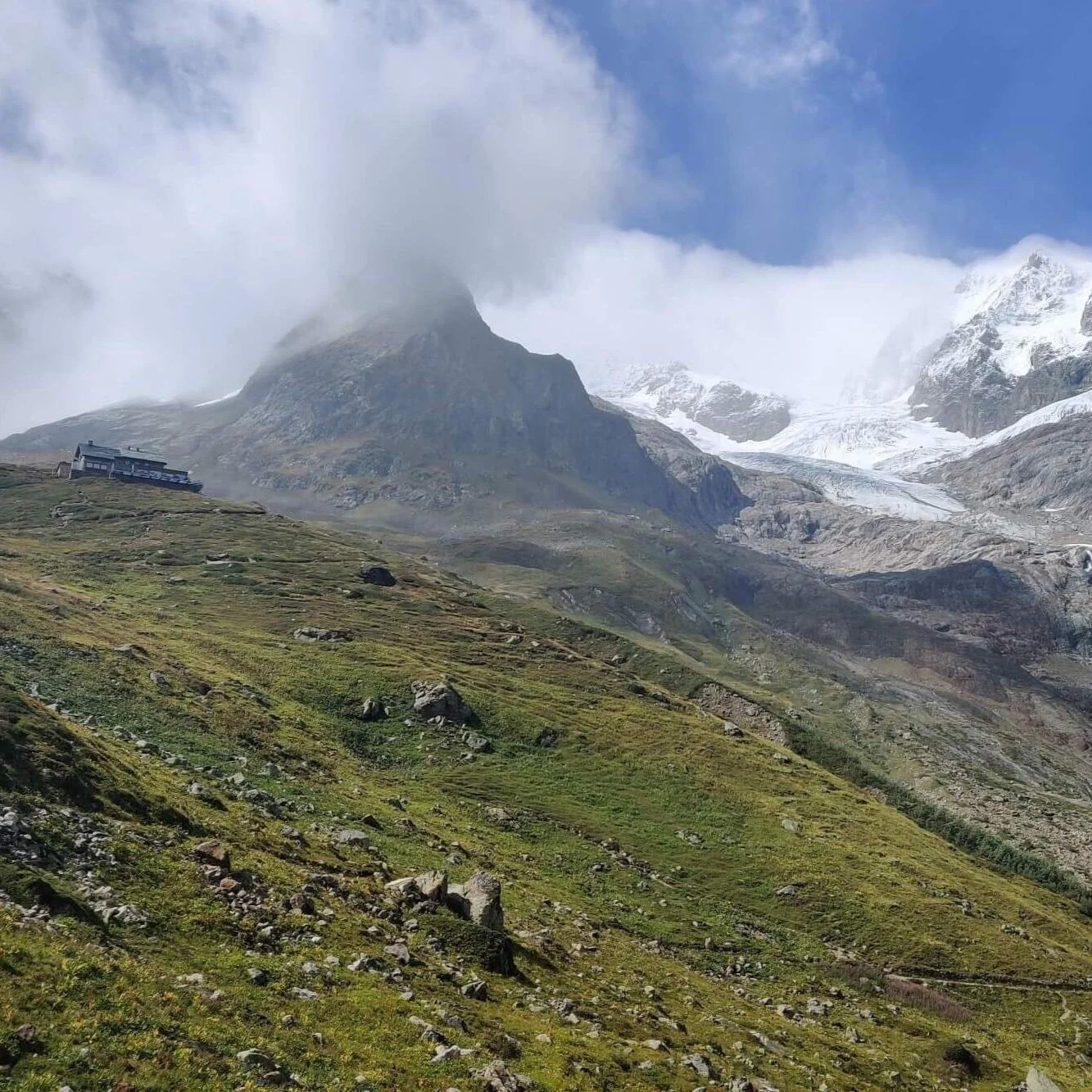
For a first-person account, read Jonas de Jong’s seven-day journey around Mont Blanc. His story offers a different perspective on combining running, mountain stages and overnight stays.
Read Jonas’s 7-day TMB running story →
Tour du Mont Blanc trail-running FAQs
Do you need to run every section?
No. Combining running and hiking is a practical approach to multi-day mountain travel. Move carefully on steep, rocky or exposed sections.
Are these the only itinerary options?
No. These are three examples. Explore different durations, routes and overnight stops, then personalise an itinerary around your group.
Are the times in the screenshots predicted running times?
No. The screenshots show estimated hiking times at different paces, excluding breaks. They are planning information rather than predicted trail-running finish times.
What should you carry if your luggage is transferred?
Carry suitable clothing, food (check which rifugios/villages are enroute), water, a headlamp and emergency essentials for your route and conditions. Include overnight items (i.e toiletries, sleeping bag liner (if required for your accommodation), towel etc) if you will not receive your bag that evening.
Is this the same as entering the UTMB race?
No. These are independent multi-day itinerary examples with overnight accommodation. They are not race entries or representations of the official UTMB race course.
What should you check before setting out?
Review current trail and weather conditions, download your route for offline use and understand your alternatives. Reconfirm any luggage services for your final itinerary.
Plan your Tour du Mont Blanc running adventure
Start with an example, compare your daily stages and shape a route around the challenge you want to take on.