

Alpine lakes, towering limestone peaks and mountain rifugios serving a well-earned dinner. The Alta Via 1 offers plenty of reasons to turn your next trail-running adventure into a multi-day journey through the Dolomites.
But how many days should you allow—and how much distance and climbing do you want to take on each day?
There is no single Alta Via 1 trail-running itinerary. Build your trip around your mountain experience, fitness, available time and preferred overnight stops. For some, that means four demanding days. For others, five or six days creates more room for breaks, recovery and enjoying the places along the way.
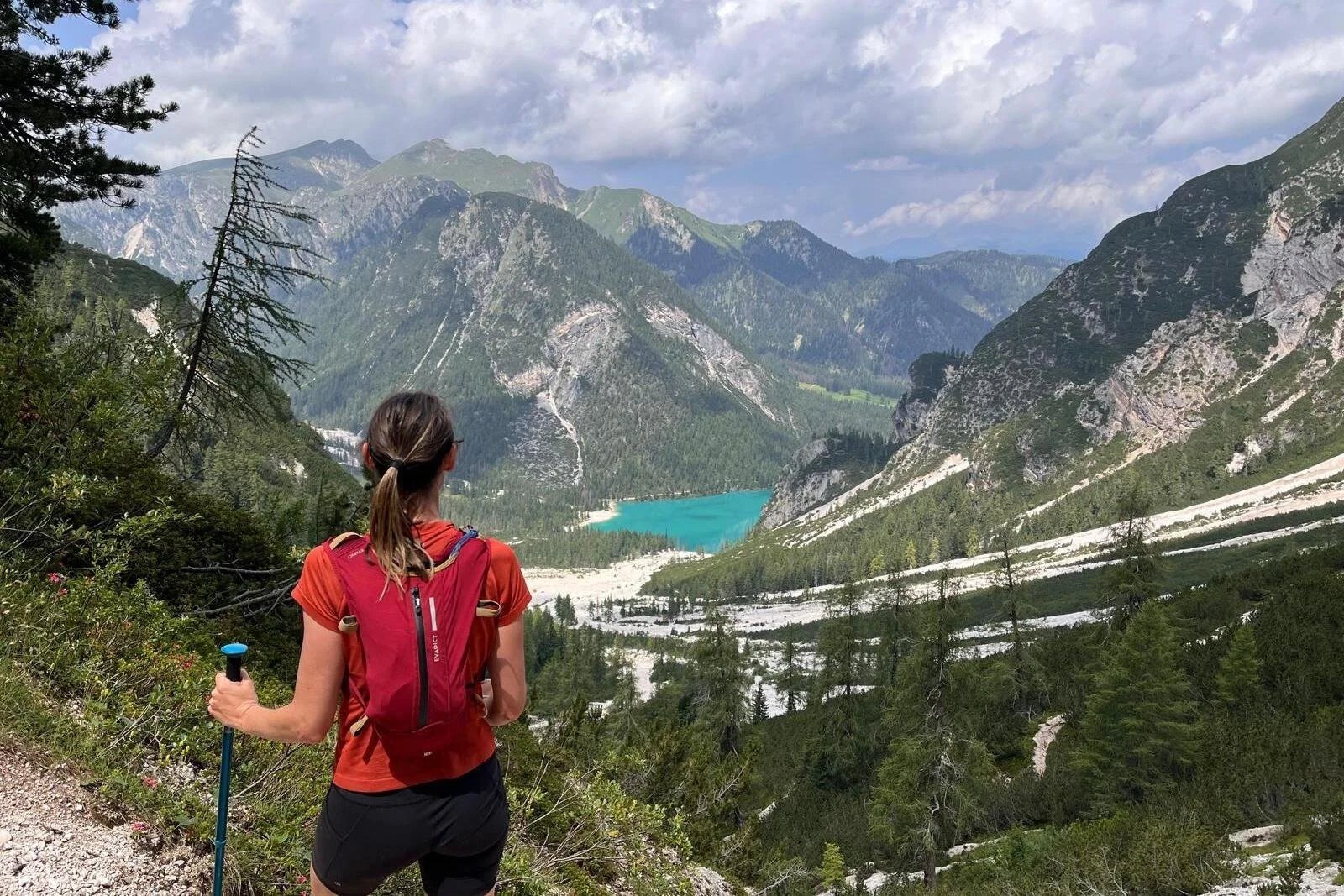
Can you trail run the Alta Via 1?
Yes. Experienced mountain runners and fastpackers can combine running and hiking to travel between overnight stops on the Alta Via 1.
Expect your pace to change throughout each stage. Steep climbs, rocky descents and exposed sections can require slow, careful movement. Plan around mountain terrain rather than assume you will run every kilometre/mile.
Staying in rifugios allows you to eat and sleep along the route without carrying camping equipment. Where you stay also determines how far you travel each day, making accommodation an essential part of planning.
How many days do you need to trail run the Alta Via 1?
The right duration depends on more than running speed. Distance, ascent, terrain, pack weight and recovery all affect what is achievable over consecutive days.
These three example itineraries illustrate different starting points:
| Example duration | Average daily distance | Average daily ascent |
|---|---|---|
| 4 days | 29km / 18mi | 1,850m / 6,150ft |
| 5 days | 22km / 14mi | 1,400m / 4,600ft |
| 6 days | 19km / 12mi | 1,150m / 3,750ft |
Figures are approximate, rounded daily averages from the example itineraries. Individual stages vary. The examples may use different routes and overnight stops, so they are not necessarily the same route divided into different numbers of days.
These are examples, not fixed packages. Explore other durations, routes and overnight combinations in The Hiking Club platform, then adapt your daily stages around your group.
What does a 4-day Alta Via 1 itinerary involve?
Four days concentrates substantial distance and climbing into a short trip. This demanding example suits experienced mountain runners and fastpackers who are comfortable repeating long days on mountain terrain.
The challenge extends beyond the climbs. Long descents place demands on tired legs, while food stops, navigation and photographs add to your time between accommodation.
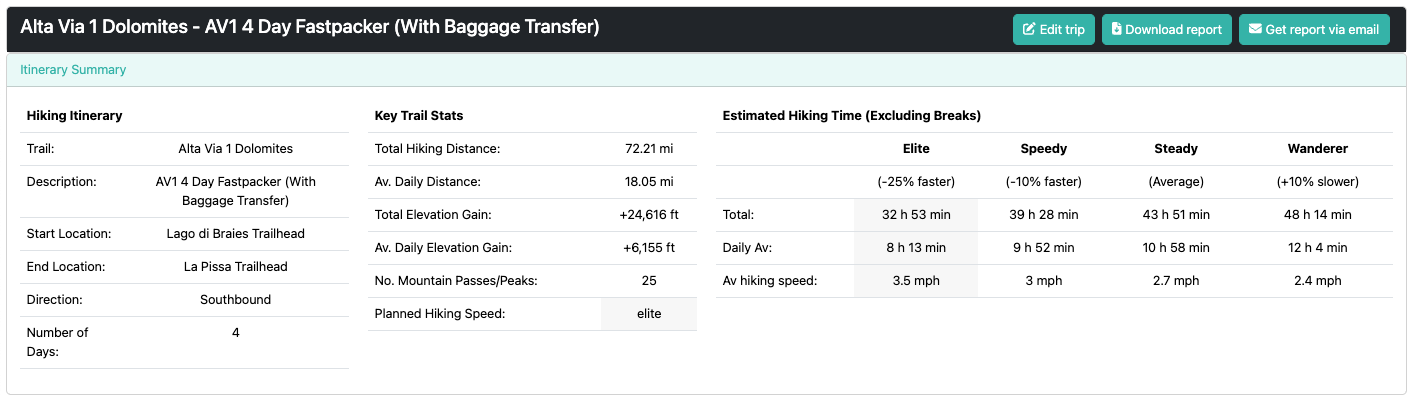
Consider this style if: you have experience completing consecutive long mountain days and want a concentrated physical challenge.
Explore the 4-day itinerary example →
What does a 5-day itinerary involve?
Five days remains a substantial mountain undertaking, while allowing a lower average daily workload than the four-day example. Depending on your pace and stages, that may create more room for a relaxed lunch, a lakeside stop or an earlier arrival at your rifugio.

Consider this style if: you want sustained mountain days with more breathing room than a four-day itinerary.
What does a 6-day itinerary involve?
Six days reduces the average workload compared with the shorter examples, while still involving demanding consecutive mountain days.
You do not need to run continuously to enjoy this style of trip. Hiking climbs and technical sections, then running suitable terrain, can be a rewarding way to move through the mountains.
Consider this style if: you prefer a lower daily workload while making steady progress between overnight stops.
Explore the 6-day itinerary example →

How do you choose the right difficulty?
Start with what your group can comfortably repeat, rather than the hardest mountain day you have ever completed.
- Recent experience: have you completed similar distance and ascent on comparable terrain?
- Recovery: how well do you recover after a long mountain effort?
- Descending: are you comfortable moving over rocky ground when tired?
- Pack weight: what will you carry between overnight stops?
- Your priorities: do you want a physical challenge, time for rifugio lunches and photographs, or a combination?
- Your group: can everyone manage the longest and most demanding stages?
Look beyond the averages. Review each day’s distance, ascent and terrain. The hardest stage may determine whether an itinerary suits your group.
Change the challenge by adjusting your duration, choosing different overnight stops, following alternative routes or concentrating on a shorter section of the AV1.
Can you arrange baggage transfers for a trail-running itinerary?
Baggage transfers are possible at specific accommodation locations, but they cannot be added to every Alta Via 1 accommodation. Use The Hiking Club platform to identify accommodation locations with road access, allowing for baggage transfer.
If you want your main bag at selected stops—or every evening—plan your route and accommodation around those arrangements from the outset.
Discuss these locations with a transfer provider when requesting a quote. Confirm access, collection and delivery arrangements for every stop and your exact dates before booking.
You can also arrange less frequent transfers, giving you access to fresh clothing and other belongings partway through the trip.
Read the Alta Via 1 baggage-transfer guide →
What if you only need luggage moved from start to finish?
Carry your overnight gear throughout the trek and send your other luggage ahead to your final accommodation. You will not have access to those bags during the hike.
Our start-to-finish luggage guide explains the options, including Send My Bag and Trenitalia’s luggage-shipping service.
How should you plan your rifugio stays?
Choose overnight stops alongside your daily route. Reaching a property can involve extra climbing or a descent away from your intended line, so check the full approach and the following morning’s departure.
- Review distance and ascent for each day.
- Inspect terrain and route alternatives.
- Check accommodation availability for your dates.
- Confirm meal arrangements and expected arrival times.
- Coordinate any baggage transfers.
If your preferred property is unavailable, check what an alternative does to both neighbouring stages before changing your plan.
Check Alta Via 1 accommodation booking status →

Alta Via 1 trail-running FAQs
Do you have to run the whole route?
No. Combining running and hiking is a practical approach to multi-day mountain travel. Steep, rocky or exposed sections may require slow, careful movement. You can also choose a specific section of the full trail depending on your time requirements.
What should you carry?
Carry suitable layers and waterproofs, food, water, navigation, a headlamp, first-aid supplies and emergency essentials appropriate for your route and conditions.
Confirm what you need for rifugio stays, including any sleeping-liner requirements. Even with baggage transfers, your daypack needs to support you throughout the mountain stage.
Are the platform’s hiking times predicted running times?
No. Treat estimated hiking times as planning information rather than predicted running times. Terrain, conditions, fatigue and your confidence on technical ground all affect your pace.
Allow separately for breaks, food stops and photographs.
Are these three fixed itinerary options?
No. The 4, 5 and 6-day routes are examples. Explore other durations and route combinations, then adapt your stages around your group and confirmed accommodation.
Are baggage transfers included?
No. Accommodation, baggage transfers and other transport are arranged separately from platform access. Confirm each transfer with your provider, including any changes to overnight stops.
What should you check before each day?
Review current trail and weather conditions, your planned stage and available alternatives. Download your route for offline use and carry enough essentials for an unexpectedly long day.
Build your own Alta Via 1 trail-running adventure
Four, five and six days are just some of the possibilities. Start with an example itinerary, compare daily distance and ascent, and shape your route around your group.
Explore AV1 itinerary examples →
Read the Alta Via 1 planning guide · Explore platform access